Table of contents



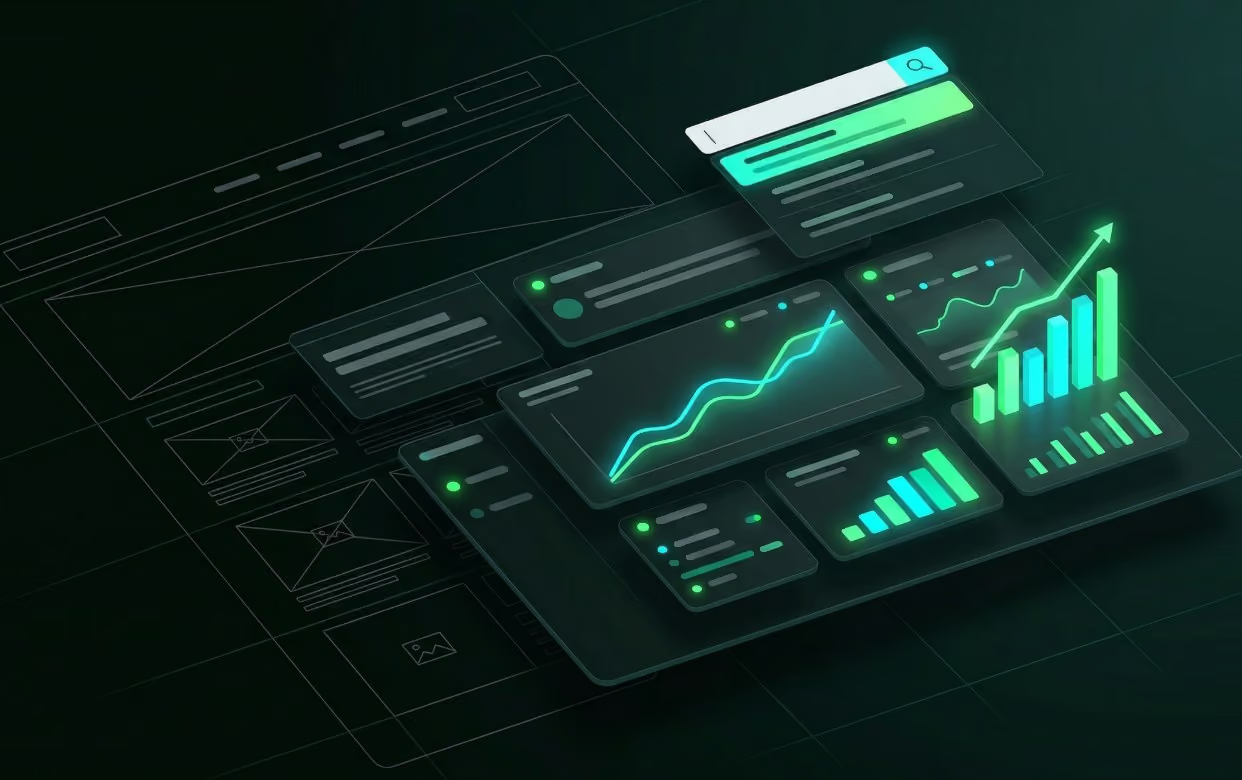
If you’re investing in a new website, you’re not just buying design. You’re buying visibility, traffic, and ultimately revenue.
That’s where SEO web design comes in.
A well-designed website should not only look good, it should rank on Google, load quickly, guide users clearly, and convert visitors into customers. The problem is, most websites are built with design and SEO treated as separate things. That disconnect is exactly why so many businesses end up with beautiful websites that don’t generate results.
This guide will walk you through how to approach seo web design the right way so your website actually works for your business.
At its core, seo web design is the process of designing and building a website in a way that makes it easy for search engines to understand and easy for users to navigate.
It’s not something you “add on” later. It’s something that needs to be built into the foundation of your website from the start.
Your website’s design directly impacts how search engines crawl, index, and rank your pages.
Things like:
All of these are design decisions, but they also play a major role in SEO performance.
When web design and SEO are aligned, your website becomes easier to rank and easier to use. That combination is what drives both traffic and conversions.
Most traditional web design focuses heavily on visuals and branding, but skips over the technical and structural pieces that actually impact performance.
Common issues we see:
The result is a website that looks polished, but struggles to rank or convert. That’s exactly what seo-friendly web design is meant to fix.
If your website is a core part of your business, then seo web design is not optional.
Search engines prioritize websites that are fast, structured well, and provide a strong user experience.
When your web design for SEO is done correctly, you’re giving Google clear signals about:
That makes it easier to rank for high-value keywords.
SEO and user experience are more connected than most people realize.
A well-structured site:
All of those signals reinforce your rankings over time.
Traffic alone doesn’t grow your business. Conversions do.
Strong seo web page design ensures that once users land on your site, they know exactly what to do next. Clear messaging, logical flow, and intentional calls to action all play a role in turning visitors into customers.
If you want your website to perform, these are the non-negotiables.
Google primarily indexes the mobile version of your site.
If your mobile experience is slow, clunky, or hard to navigate, it will hurt both rankings and conversions.
A strong seo web design approach always starts with mobile:
Speed is one of the biggest factors in both SEO and user experience.
Even a one-second delay can significantly impact:
This comes down to decisions like:
Your site structure should make sense to both users and search engines.
That means:
This is one of the most overlooked parts of web design seo, but it has a major impact on how your site performs.
Every page should have:
These elements help search engines understand your content and improve click-through rates from search results.
On-page SEO is where your design and content come together.
Your headings should follow a clear hierarchy:
This helps both users and search engines quickly understand the page.
You don’t need to force keywords. You need to use them intentionally.
For seo web design, that means:
This is where a lot of sites go wrong. They either over-optimize or ignore it entirely.
Internal links help distribute authority across your site and guide users deeper into your content.
For example:
This is one of the easiest ways to improve both SEO and user flow.
This is the backend side of seo web design, and it’s just as important.
Google uses Core Web Vitals to measure user experience.
These include:
If your site struggles here, it will impact rankings.
Schema helps search engines better understand your content.
It can enhance your listings with:
This improves visibility and click-through rates.
Your site needs to be easy for search engines to crawl.
That includes:
We often see sites with hundreds of low-value pages being indexed, which dilutes performance.
Ranking is only half the equation. Your site also needs to convert.
Every page should have a clear next step.
That could be:
The key is making it obvious and easy.
Your landing pages should be focused and intentional.
That means:
This is where seo web design directly impacts revenue.
People don’t convert unless they trust you.
Strong websites include:
For example, when we reference our work with clients like Kindig-It Design, it helps validate the results we’re talking about. These are also great opportunities for internal linking to deeper case studies.
Even small mistakes can hold your site back.
Heavy images, unnecessary animations, and poor optimization can kill performance.
If your site isn’t easy to use on mobile, you’re losing both rankings and conversions.
This is the biggest mistake.
Trying to “add SEO later” almost always leads to:
SEO web design needs to be part of the process from day one.
Not all agencies approach this the same way.
Look for a team that:
A strong seo-friendly web design project is an investment.
If your website is a core revenue driver, cutting corners here usually costs more in the long run. A properly built site should:
Your website should not just exist. It should perform.
When seo web design is done right, your site becomes:
If you’re investing in a new website or redesign, this is where the real value is created.
SEO-friendly web design is the practice of building a website that is structured, fast, and optimized in a way that helps it rank in search engines while also providing a strong user experience.
Yes. Design impacts page speed, structure, mobile usability, and user behavior, all of which influence search rankings.
SEO typically takes a few months to start showing meaningful results, but timelines vary depending on competition, site quality, and strategy.