Table of contents



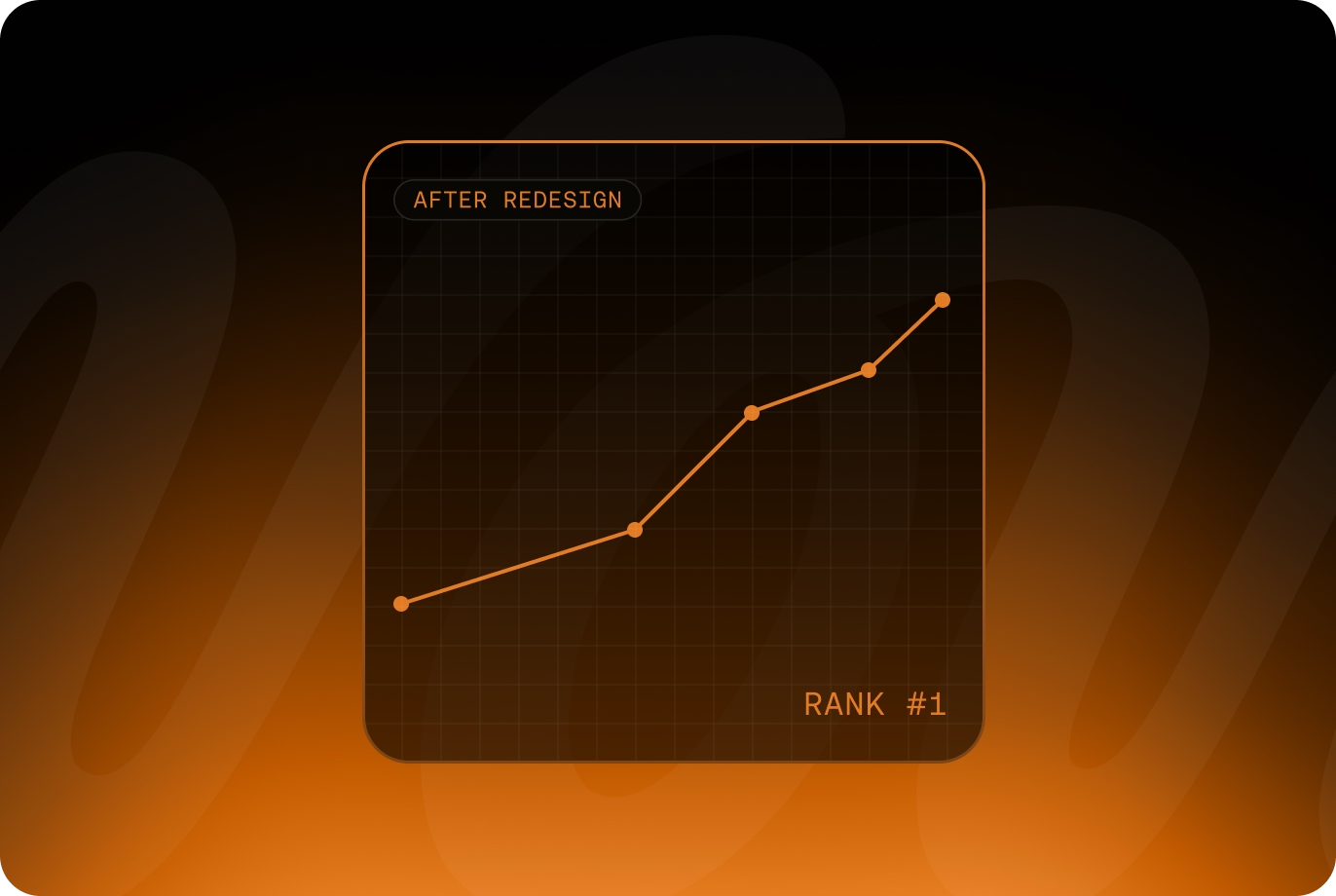
A website redesign can improve user experience, modernize your brand, increase conversions, and create a stronger foundation for future growth. However, many businesses underestimate the impact a redesign can have on search engine performance.
When SEO is overlooked during a redesign, rankings can drop, organic traffic can decline, and valuable search visibility can disappear almost overnight.
The good news is that website redesign SEO does not have to be risky. With the right planning, technical implementation, and post-launch strategy, a redesign can improve both search performance and user experience simultaneously.
In this guide, we cover how to redesign a website without losing SEO, the most common mistakes to avoid, and the steps you should take before, during, and after launch. If you are also considering which platform to build on during a redesign, the Webflow development services page covers how we approach builds that are structured for both performance and long-term SEO.
Yes. Website redesign SEO should be considered from the very beginning of any redesign project.
A website redesign can affect URL structure, site architecture, internal linking, page speed, mobile usability, metadata, content organization, and crawlability. Search engines rely on these elements to understand and rank your website. When major changes occur without proper planning, search engines may struggle to interpret the new version of your site.
Many businesses ask: does website redesign affect SEO? The answer is absolutely yes.
However, the impact can be positive or negative depending on how the redesign is executed.
A strategic redesign can improve rankings, increase engagement, and boost conversions. A poorly planned redesign can result in traffic loss and months of recovery.
At Wow House Studio, we have seen firsthand how strategic redesigns can improve search performance. Following a website redesign and ongoing SEO efforts for Speech Therapy PD, organic clicks increased 379% year over year, growing from approximately 600 weekly clicks to approximately 2,400 weekly clicks while maintaining strong search visibility throughout the process.
.jpg)
There are many legitimate reasons to invest in a redesign.
Common reasons include outdated design, poor user experience, slow loading times, rebranding initiatives, mobile responsiveness issues, weak conversion performance, platform migrations, and content restructuring.
As businesses grow, websites often become fragmented over time. New pages are added, content becomes outdated, and navigation becomes increasingly difficult for users.
A redesign provides an opportunity to simplify the experience while improving technical SEO performance. Whether the project involves a full platform migration or a structural refresh, the principle is the same. For businesses evaluating a move to Webflow specifically, our custom website design service is built around preserving SEO equity through the transition.
The key is ensuring SEO remains part of the process from day one rather than being treated as an afterthought.
Before touching design files or development environments, complete a thorough SEO assessment.
The first step in any website redesign SEO strategy is understanding what is currently working.
Review organic traffic, top-performing pages, conversion-driving pages, ranking keywords, backlinks, and indexed pages. Tools such as Google Analytics, Google Search Console, Ahrefs, and Semrush can help identify your most valuable assets.
Many businesses make the mistake of redesigning without understanding which pages generate the majority of their traffic. If a page currently drives qualified visitors and leads, it deserves special attention during the redesign process.
Before launching any redesign, create a complete crawl of your current website.
Document URLs, page titles, meta descriptions, H1 tags, internal links, canonical tags, and redirects. This crawl serves as a blueprint throughout the redesign process. Without a complete inventory, it becomes difficult to identify missing pages after launch.
Record baseline metrics before development begins.
Track organic traffic, keyword rankings, conversion rates, bounce rates, page speed scores, and indexed page counts. These benchmarks allow you to accurately measure performance after launch. Without baseline data, it is difficult to determine whether a redesign improved or harmed SEO.
Not every page needs to be rewritten.
In many cases, top-performing content should remain largely intact. Preserve ranking pages, high-converting landing pages, valuable blog content, and pages with strong backlink profiles. Improving content is often beneficial, but removing proven content without a clear strategy can negatively impact search visibility. For landing pages specifically, the relationship between page structure and conversion performance is covered in the landing page design for lead generation guide.
Site architecture plays a significant role in website redesign SEO.
During planning, evaluate navigation structure, URL hierarchy, internal linking opportunities, and content organization. Search engines favor websites with clear structures and logical pathways. A redesign should simplify navigation rather than make it more complicated.
Once planning is complete, focus shifts toward implementation.
Redirect mapping is one of the most important components of website redesign SEO.
Whenever URLs change, 301 redirects should be implemented. These redirects help preserve rankings, transfer authority, prevent broken links, and maintain user experience.
Every existing URL should either remain unchanged or redirect to the most relevant new page. Avoid redirecting multiple pages to the homepage, which can create confusion for both users and search engines.
Many redesign projects unintentionally remove important SEO signals.
Be sure to preserve page titles, meta descriptions, header structure, schema markup, image alt text, and internal links. Even if visual designs change dramatically, these foundational SEO elements should remain intact whenever possible.
Modern SEO and user experience go hand in hand.
Google prioritizes mobile-first indexing, making responsive design essential. Focus on mobile usability, Core Web Vitals, image optimization, code efficiency, and fast hosting infrastructure. A redesign should improve performance, not slow it down.
Many redesign projects involve migrating to a new platform.
Whether moving from WordPress, Squarespace, Drupal, or another system, migration introduces additional SEO considerations. This is one of the areas where platform choice matters directly to SEO outcomes. Webflow development services in particular offer cleaner code output and native performance advantages that benefit long-term search visibility compared to heavily themed or plugin-dependent builds. If you are also weighing whether e-commerce functionality should be factored into the migration, the Shopyflow vs Webflow e-commerce comparison and the Webflow vs Shopify breakdown cover those considerations in detail.
Best practices for any migration include maintaining URL consistency where possible, preserving metadata, testing redirects before launch, updating canonical tags, verifying schema markup, and monitoring indexation closely.
Businesses often ask how to redesign a website without losing SEO during a migration. The answer is preparation. Most migration-related traffic losses occur because important technical details are overlooked during launch.
Even experienced teams occasionally make avoidable mistakes.
Common redesign errors include launching without redirects, deleting high-performing pages, changing URLs unnecessarily, removing valuable content, blocking search engines accidentally, forgetting XML sitemaps, losing metadata during migration, and breaking internal links.
Another common mistake occurs when design decisions override SEO priorities. A beautiful website that cannot be discovered through search engines ultimately limits business growth.
Successful redesigns balance aesthetics, usability, performance, and search visibility. This is the approach we take across all projects at Wow House Studio, including work on projects like Velocity on Canvas and OMAG Automotive, where visual quality and search foundation had to coexist from day one.
The launch date is not the finish line. In many ways, it is the beginning of the monitoring phase.
Generate and submit an updated XML sitemap through Google Search Console. This helps search engines discover new pages, updated content, and changed URLs. Submitting a sitemap accelerates indexing and provides search engines with a clear roadmap of the redesigned site.
Google Search Console should become your primary monitoring tool immediately after launch.
Watch for indexing issues, coverage errors, redirect problems, mobile usability concerns, and Core Web Vitals alerts. Early detection allows problems to be corrected before they affect rankings significantly.
No matter how carefully a redesign is planned, issues can still appear after launch.
Review 404 errors, redirect chains, broken internal links, and missing resources. Addressing these quickly helps maintain search visibility and improve user experience.
Compare post-launch performance against your pre-launch benchmarks.
Monitor organic sessions, keyword rankings, conversions, and engagement metrics. Minor fluctuations are normal. Significant declines should trigger a deeper investigation.
For critical pages, use Google Search Console's URL Inspection tool to request indexing.
Priority pages often include service pages, product pages, category pages, and high-traffic blog posts. This can help accelerate search engine recognition of important updates.
When executed correctly, website redesign SEO creates opportunities for substantial growth.
Benefits often include improved site speed, better mobile experience, stronger content structure, increased conversions, better user engagement, enhanced crawlability, and stronger internal linking.
A strategic redesign aligns user needs with search engine requirements. Rather than simply refreshing visual design, successful projects improve how users navigate, consume information, and take action. This applies whether the project is a focused landing page rebuild or a full platform migration for a growing e-commerce brand. Our e-commerce website services follow the same SEO-forward process described throughout this guide.
Businesses frequently wonder whether a website redesign affects SEO. The better question is how SEO can be leveraged during a redesign to create a stronger website than before.
When SEO guides architecture, content strategy, and technical implementation, redesigns often result in long-term growth rather than temporary disruption.
A website redesign does not have to result in lost rankings or declining traffic.
With proper planning, auditing, migration strategies, and post-launch monitoring, website redesign SEO can become an opportunity rather than a risk.
The most successful redesigns begin with a clear understanding of existing performance, preserve valuable SEO assets, and prioritize both user experience and search visibility throughout the project.
Whether you are modernizing an aging website, migrating to a new platform, or restructuring content for growth, SEO should remain part of every decision from discovery through launch. Working with a boutique agency that treats SEO as a core part of the build rather than a post-launch checklist item makes that significantly more achievable.
When approached strategically, a redesign can improve rankings, increase conversions, and create a stronger foundation for future digital marketing efforts.
If you are planning a redesign and want a second set of eyes on what your current site is doing well and where the risks are, the freebies page has resources to help you get started, or you can get in touch directly to talk through your specific project with the Wow House Studio team.
Will redesigning my website hurt SEO?
Not necessarily. A well-planned redesign can maintain or even improve rankings. Most SEO problems occur when redirects, content preservation, and technical SEO requirements are overlooked during the redesign process.
How long does SEO recovery take after a redesign?
Recovery timelines vary depending on the scope of changes. Minor redesigns may stabilize within a few weeks, while larger migrations can take several months. Proper planning significantly reduces recovery time.
Should I redesign my website for SEO?
If your website suffers from poor performance, outdated architecture, weak mobile usability, or low conversion rates, a redesign can be beneficial. SEO should be integrated into the redesign process to maximize results.
What is the biggest SEO mistake during a website redesign?
The most common and damaging mistake is failing to implement proper 301 redirects. Without redirects, search engines and users may encounter broken pages, resulting in lost rankings, traffic, and authority.