Table of contents



Your website should be doing heavy lifting for your business. Not just sitting there looking pretty.
Most businesses pour money into ads, SEO, and content, and then send all that traffic to a website that wasn't built to convert it. The result is a gap between visibility and performance. You're generating interest, but the experience isn't guiding people anywhere. That interest quietly leaks away.
Web design optimization is how you close that gap. It's the discipline of making sure your site is structured, designed, and built around how people actually move through it, not just how it looks in a mockup.
Web design optimization is the ongoing process of improving how your website performs across usability, speed, and conversion. It goes beyond aesthetics. It's about how effectively your site supports real business goals.
A well-optimized website does three things immediately:
When those elements are aligned, your website becomes a core part of your marketing system instead of a static liability.
This matters especially for businesses considering a larger investment in their digital presence. If you're evaluating what a serious, results-driven build actually looks like, What to Expect When Investing $20K+ in a Custom Website is worth a read before you make any decisions.
The websites that consistently perform well share a few common traits. They're not accidents.
Users should understand what your business does within seconds of landing on your homepage. If your messaging is buried, jargon-heavy, or trying to say too many things at once, people will leave before they've even had a chance to engage. This is one of the most common issues we see, and one of the easiest to fix with the right strategy upfront.
Every page should move users through a specific path. That means thinking carefully about how content is organized, how sections are sequenced, and where calls to action appear. Visitors shouldn't have to figure out where to go next. The page should show them.
A slow website loses attention before the page even finishes loading. Performance optimization affects both how users feel about your site and how Google ranks it. It's foundational, not an afterthought. This is why Webflow development has become our preferred build environment: it produces fast, clean, scalable code without the performance baggage of overcustomized WordPress builds.
Your design system, typography, and spacing should feel cohesive throughout the entire site. Inconsistency creates unconscious friction. When a page feels "off," users lose confidence, even if they can't articulate why.
These principles aren't something you bolt on at the end. They're established early in the process, through strategy and wireframing, long before anyone opens a design file.
A strong web design marketing strategy starts with a simple question: what is this website actually supposed to achieve?
For some businesses, it's lead generation. For others, it's product sales, brand positioning, or education. Without that clarity, it becomes almost impossible to make effective design decisions. You end up designing by committee, and the result is a site that tries to do everything and does nothing well.
When design and marketing are genuinely aligned:
This alignment compounds. Paid traffic performs better. SEO efforts convert more effectively. Every marketing channel connected to your website gets more efficient.
If you're running SEO alongside your website work, it's worth understanding how the two reinforce each other. Our digital marketing and SEO services are built around exactly this integration, not search rankings in isolation, but rankings that translate to actual revenue.
From an agency perspective, one of the most important things we think about is how a website holds up six months after launch, not just on delivery day.
Content should be easy to update and expand without pulling in a developer every time. This is especially important for blogs, case studies, and campaign landing pages. A rigid CMS is a roadblock to marketing momentum.
Marketing needs evolve. The website you launch today needs to support campaigns, offers, and initiatives you haven't thought of yet. A well-architected site allows for new sections and updates without triggering a full redesign every 18 months.
Not all information carries the same weight. Structuring content clearly helps users find what they need quickly and helps search engines understand what your site is actually about. This is a principle we apply consistently in our custom website design work, from the first wireframe through final build.
Understanding how users interact with your site is non-negotiable. Proper setup of analytics and tracking tools makes ongoing optimization possible instead of directional.
Improving engagement and conversions generally comes down to reducing friction and making decisions easier for users. Here's where to focus:
Strengthen your first impression. The top section of your homepage, the hero, is the highest-leverage real estate on your site. It should clearly communicate what you offer and who it's for, instantly. This one area often delivers more impact than anything else you could optimize.
Simplify navigation. Too many options overwhelm users. Navigation should be focused and clear enough that people don't have to think about it.
Use clear, consistent calls to action. Every page should guide users toward one specific next step. Calls to action should be visible, relevant, and easy to act on. If someone has to hunt for a way to contact you, you've already lost them.
Optimize the mobile experience. A significant portion of your visitors are on their phones. If the mobile experience is clunky, slow, or disorganized, it's costing you. This isn't optional anymore. It's table stakes.
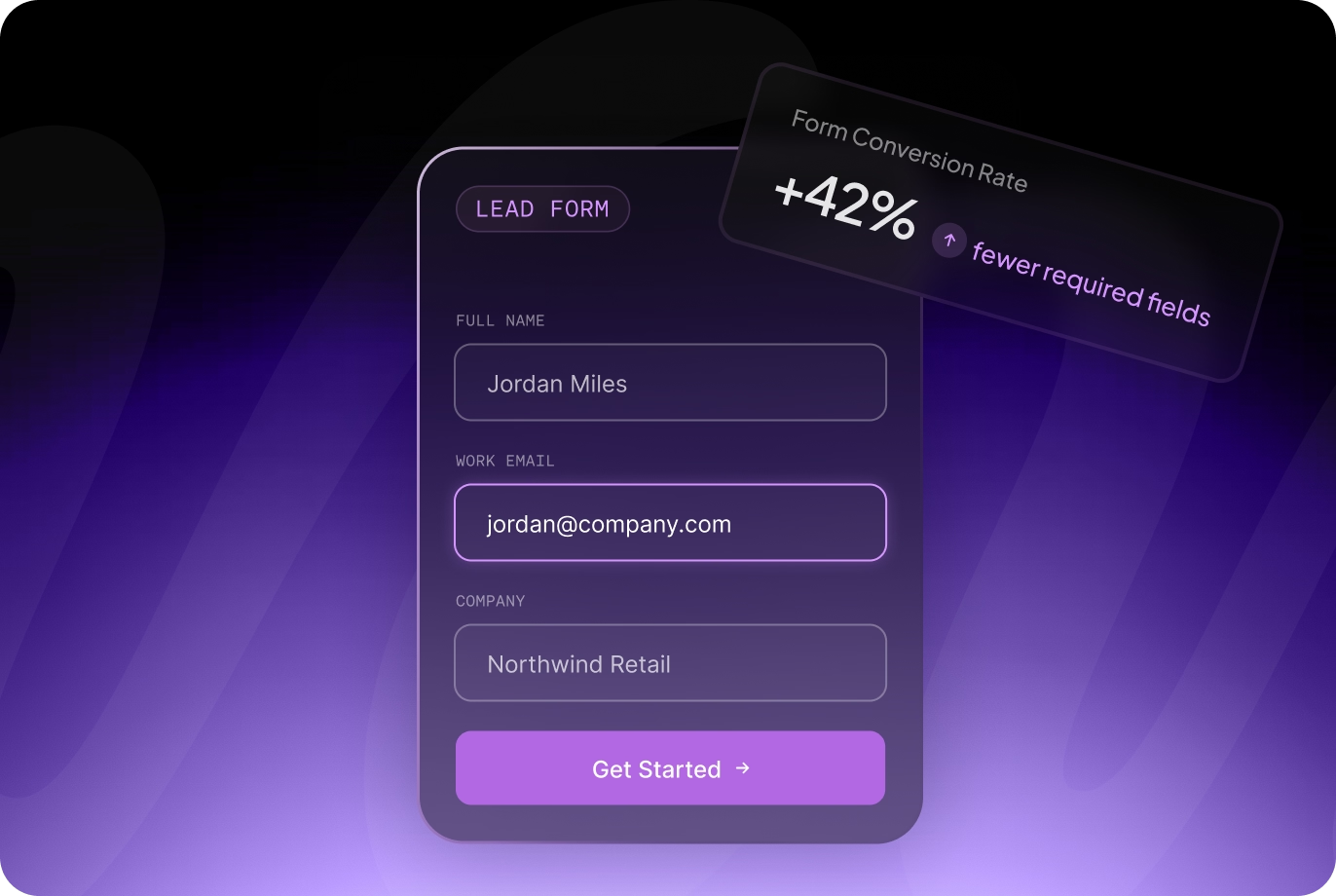
Remove unnecessary steps. Whether it's a contact form, checkout flow, or navigation structure, the shorter and simpler the path to conversion, the better.
Want to see these principles in action? The Kindig It CF1 project and the Speech Therapy PD case study are both good examples of how we apply these to real builds. Speech Therapy PD saw a 300% increase in conversions after launch.
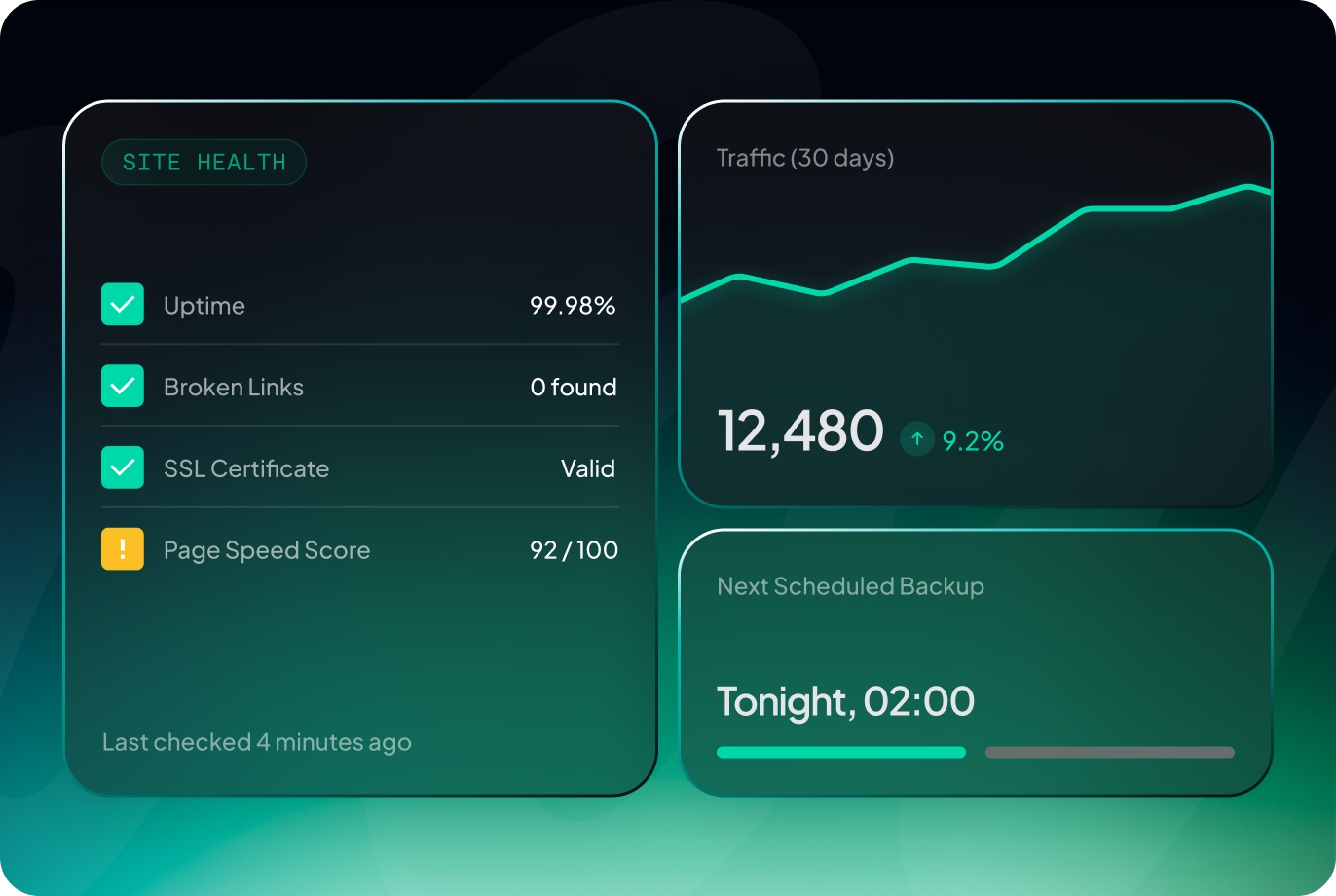
You can't improve what you don't measure. A few core metrics to track:
It's also worth reviewing performance before and after significant updates. Without that before/after comparison, you're guessing at what's working.
For e-commerce specifically, conversion rate optimization takes on additional complexity. Our e-commerce website services are built around maximizing the revenue each visitor represents, from product page structure to checkout flow optimization.
We see the same patterns repeatedly in underperforming websites.
Over-prioritizing visual design. A beautiful site that doesn't communicate clearly or guide users effectively is just expensive decoration. Design should serve conversion, not the other way around.
Trying to say everything at once. When every piece of content is emphasized equally, nothing stands out. Hierarchy is what creates clarity.
Neglecting mobile. A poor mobile experience quietly kills engagement and conversions, often without anyone on the team realizing it because they're previewing on desktop.
Treating the website as a one-time project. The best websites are living systems. They get refined based on real user data. A launch is a starting point, not a finish line.
For businesses that need their brand and website working together as a cohesive system, not just a pretty site, our branding and design systems work is built around that exact problem.
Improving your website doesn't always mean starting from scratch.
In many cases, meaningful gains come from refining messaging, simplifying structure, improving load performance, and sharpening calls to action. These aren't small tweaks. Done right, they move the needle significantly.
For businesses planning a larger redesign or custom build, the most important investment you can make upfront is in strategy. Understanding how the site should function before a single page is designed leads to better outcomes, faster timelines, and a site that doesn't need to be redone in two years.
If you want to see how we approach this with real clients, the OMAG Automotive and Velocity on Canvas case studies show what that process looks like from brief to launch.
Web design optimization isn't about making isolated improvements. It's about building a system where design, content, performance, and strategy all support the same goal.
When those elements are genuinely aligned, your website becomes more effective, your marketing gets more efficient, and the experience improves for the people who matter most: your customers.
If you're not sure where your site currently stands, we offer a free website audit with no pitch and no pressure. Just honest feedback from a team that cares about building things that actually work.