Table of contents



If you've looked into building a website recently, you've probably come across the term custom website design more than once. It gets used constantly, but it can be genuinely difficult to understand what it actually means in practice or how it differs from what you'd get choosing a template and customizing it yourself.
At a basic level, custom website design means your website is designed and built specifically around your business rather than being based on a pre-made template. That part is easy enough to understand. What's harder to see from the outside is where that difference actually shows up and why it matters for growth.
The gap becomes visible in how the site is structured, how it guides a visitor through your content, and how easy it is for your internal team to manage as the business evolves. Those are the factors that determine whether a website actually performs over time or simply exists as a digital placeholder.
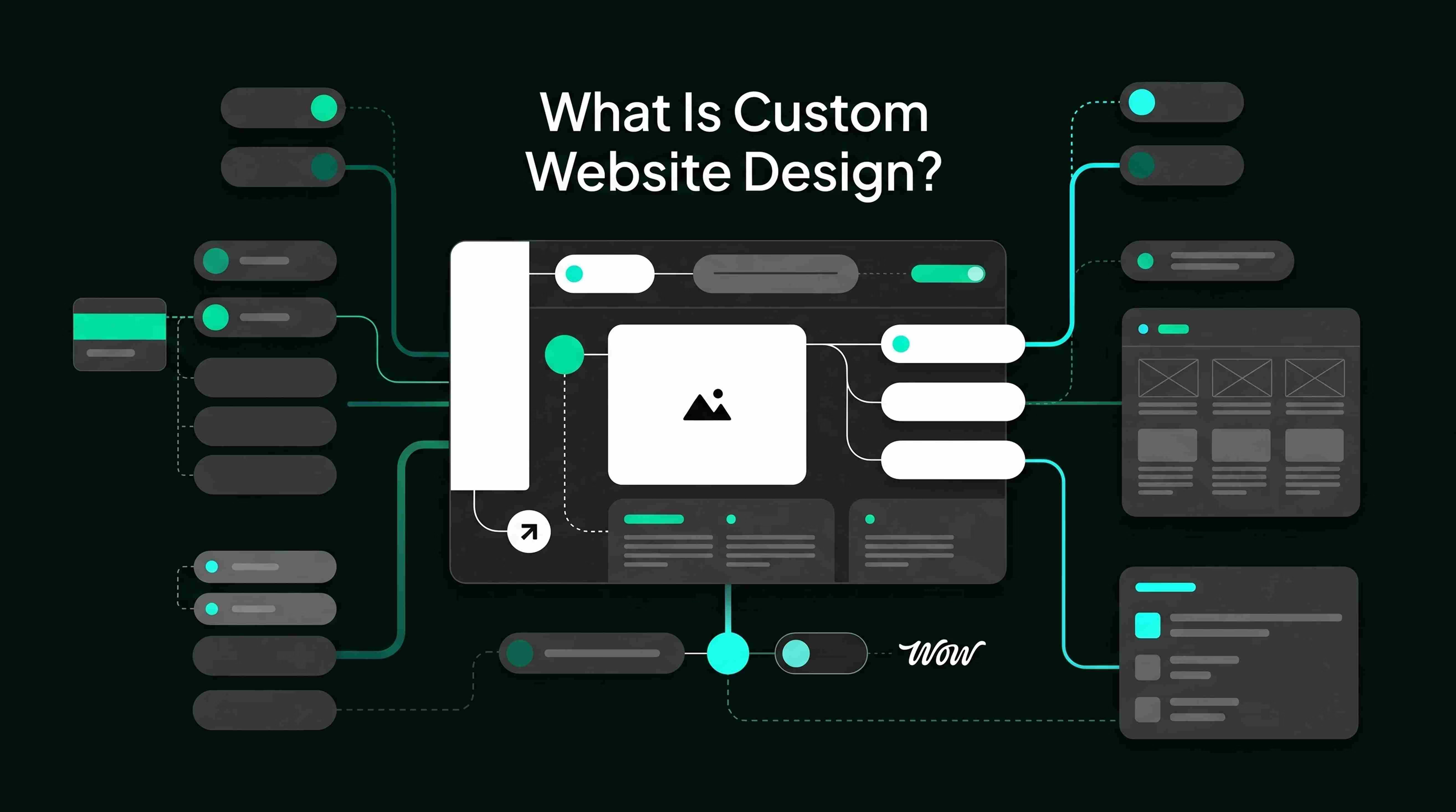
Custom website design is a process where the structure, layout, visual language, and functionality of a website are created from scratch based on a company's specific goals, target audience, and internal operational needs.
Instead of starting with a template and adjusting it to fit, the process starts with a different set of questions entirely. What does this business actually need the website to do? How are people finding it? What actions should they take once they land on it? What does success look like six months after launch?
From there, the design and development are built around those answers rather than imposed on top of a predefined structure.
A few things that are consistently true in a well-executed custom build: the layout is fully tailored rather than constrained by template architecture, the site structure is built around specific business goals rather than generic page types, and the user experience is designed around your actual audience rather than a theoretical average.
This is also where custom website design overlaps with what practitioners call customer-centric web design. In both cases, the focus shifts away from "what looks good" and toward "what helps someone understand the offer, build trust, and take action." That shift in orientation tends to produce meaningfully different results.
This is usually where businesses get stuck in the decision process, and it's worth being direct about what actually changes between the two approaches.
Templates are not inherently a bad choice. They're a practical option for early-stage businesses or situations where speed and cost matter more than long-term flexibility. The tradeoff is that you're always working within a predefined structure that was built for a hypothetical business, not yours specifically.
Custom website development removes that constraint, and the difference shows up most clearly in three areas.
Templates come with a fixed structure even when the platform allows you to rearrange sections or swap out content blocks. The underlying architecture stays the same and your business has to fit within it.
Custom website design is structured around how your business actually operates. If you need a specific conversion flow, unique page types for different audience segments, or integrations with tools your team already uses, those can be built intentionally rather than worked around. That distinction becomes more important as the business grows and the website needs to do more.
With templates, branding is essentially layered onto an existing design system created for no business in particular. The result often feels interchangeable with other companies using the same theme, which is a problem when differentiation is one of your goals.
With custom design, the visual and interaction design system is created around your brand from the beginning. The typography, spacing, color logic, component behavior, and overall personality are all deliberate decisions tied to who you are and who you're trying to reach. The site becomes an expression of the brand rather than a container for it.
A strong brand foundation also connects directly to the branding and design systems work that typically precedes a custom build. When those pieces are built together, the result is more coherent and more durable.
Performance here covers more than page speed, though that matters too. It also includes how the site functions as a business tool overall.
Templates frequently include features, scripts, and design elements you don't need, which can slow load times and complicate future updates. A custom build tends to be more intentional. Every component serves a purpose, which keeps the codebase cleaner and the site faster over time.
There is no single checklist that defines a custom website, but several patterns show up consistently across well-executed custom builds.
The interface and user experience in a custom build are designed based on how people actually interact with your specific business and offering.
That includes decisions about how information is introduced and sequenced, how someone moves from page to page through the site, and where and how decision points are presented. Instead of fitting your content into a structure that already exists, the structure is built around your content and your audience's natural path through it.
A custom website is typically built with the expectation that it will grow rather than stay static. That might mean a CMS designed for adding new content without developer involvement, reusable components that maintain visual consistency at scale, and page types that can be expanded as the business adds services or enters new markets.
This matters more than most clients expect upfront, especially once they start adding case studies, blog content, new service pages, or team members. A template that works well at launch can become a bottleneck within 12 months if it wasn't built with growth in mind. If you're thinking through a website redesign, scalability is one of the first things worth evaluating on your current site.
Search visibility is heavily influenced by how a site is structured at the architectural level, not just by what content exists on individual pages.
Custom builds make it significantly easier to organize pages in a hierarchy that search engines can understand and navigate, target specific keywords with dedicated pages built for that purpose, and expand content over time without breaking the existing structure or creating cannibalization issues.
This becomes especially important if organic search is a meaningful acquisition channel for your business. A Webflow development approach in particular gives you clean semantic markup and precise control over the technical SEO elements that affect how pages are indexed and ranked.
The benefits of custom website design are not abstract. They tend to show up in measurable ways over time.
A custom site reflects the actual business more accurately, particularly when the company has a strong point of view, a differentiated offer, or a specific audience it's trying to reach.
Instead of feeling like a variation of something recognizable, the site becomes a clearer and more specific extension of the brand. In markets where competitors are largely using similar templates, a well-executed custom site can create meaningful separation quickly, not because it's more complex, but because it feels more intentional and aligned.
Conversion improvements typically come from reducing friction and making the right next step feel obvious at every point in the experience.
On the Speech Therapy PD project, the work wasn't about adding features or increasing the amount of content on the page. It was about simplifying how users moved through the site and making key actions easier to take. Over the first year following the redesign, that resulted in a conversion increase of more than 300 percent, which had a direct and measurable impact on revenue.
That result didn't come from a better-looking template. It came from a custom structure built specifically around how that audience behaves and what they need to feel confident taking the next step.
In most markets, the majority of competitors are working within similar template constraints. A well-executed custom website design stands out not through complexity but through clarity, coherence, and a sense that the experience was built for a specific person with a specific need in mind.
For businesses where the website is part of the sales process, that difference can affect close rates in ways that are difficult to attribute directly but easy to feel when they change.
Not every business needs a custom website, and in some cases it is not the right investment at a particular stage. Custom website design makes most sense when the website plays a meaningful role in generating leads, building trust, or supporting growth.
For early-stage startups, the right answer depends heavily on the business model.
If the website is a core part of acquiring users or validating the product with real prospects, a custom approach can provide the flexibility and clarity that drives results. If the immediate goal is simply to establish an online presence while the business finds its footing, a template is often the more practical starting point.
Agencies and professional service businesses frequently benefit from custom builds because their website needs to reflect the quality and sophistication of the work they're selling. A template-based site creates an immediate tension between the story being told and the medium being used to tell it.
Custom design also provides the flexibility to showcase projects, case studies, and evolving service offerings in a structured way that grows with the business. There's a reason boutique agencies tend to outperform larger ones on projects requiring this level of strategic thinking, including their own website builds.
For e-commerce, custom design becomes increasingly relevant as the brand matures and the products require more context to sell effectively.
Once you move beyond basic product listings and into brand storytelling, product education, or unique buying flows, template structures can start to feel genuinely limiting. The Webflow development approach works especially well here because it combines design flexibility with a CMS that product teams can manage without developer help.
Personal brands that rely on content, audience trust, or high-ticket services often benefit significantly from a tailored experience.
The way information is structured and presented, how the story unfolds as someone moves through the site, and how the offer is framed at the moment of decision can all directly affect both engagement and conversion.
This is usually where the conversation moves to cost, and it's worth being direct about what the numbers look like.
Custom website design services typically start around $20,000 and can go considerably higher depending on scope, complexity, the level of strategy involved, and the platform used to build it.
The more useful question is not whether it's more expensive than a template. It's whether the website is expected to produce a return and over what timeframe.
If your website is a primary source of qualified leads, a key part of your sales or onboarding process, or something you plan to build on and expand over the next several years, a custom build tends to make significantly more sense because it gives you a foundation that scales without requiring a full rebuild every 18 months.
If the website is more of a basic online presence or a placeholder while the business figures out its direction, a template is often the more practical and honest option for that stage.
You can review how we structure engagements and what different scopes of work typically include on the pricing page. If you're not sure where your project falls, the free site review is a useful starting point for understanding what your current site is doing well and where a custom approach would make a material difference.
Not inherently, and it depends entirely on where the business is and what the website needs to do. Templates are a genuinely good fit for businesses that need to move quickly, keep initial costs low, or are still validating their model.
Custom website design is the better fit when the website needs to support growth at scale, handle meaningful complexity, or differentiate the business in a market where most competitors look similar. The custom website design services at Wow House Studio are built for businesses that have reached that inflection point.
Most custom website projects take between 6 and 12 weeks from kickoff to launch, depending on scope. That timeline includes strategy and planning, design, development, revisions, testing, and launch preparation. More complex builds with advanced integrations or larger content architectures can take longer.
You can explore case studies and portfolio work on the Wow House Studio website and read more strategic thinking on web design, Webflow, and conversion on the full blog. If you want to talk through a specific project, the easiest next step is to get in touch directly or start with the free site review.