Table of contents



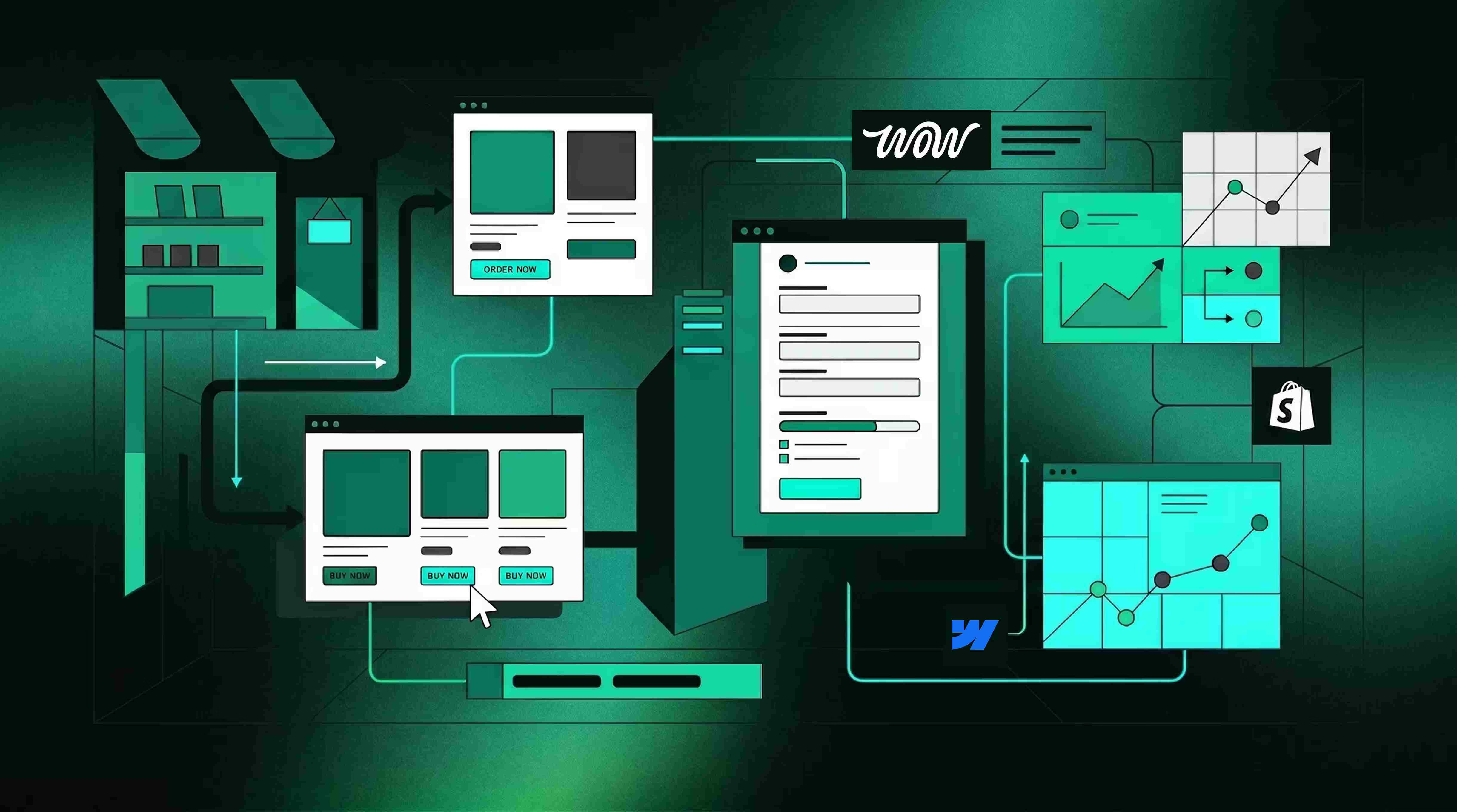
If you run an e-commerce business, getting traffic to your store is only half the equation. What actually determines revenue is what happens after someone lands on the site.
Most online stores invest heavily in marketing and traffic acquisition while underinvesting in the shopping experience itself. The result is a website that consistently attracts visitors but struggles to convert them into customers at a rate that justifies the spend.
That gap between traffic and revenue is exactly where e-commerce conversion rate optimization becomes the highest-leverage work available.
Conversion optimization is the process of improving how your website guides someone from initial browsing to completed purchase. Sometimes that means improving site speed or simplifying checkout. Other times it means rethinking the structure of product pages, navigation hierarchy, or mobile layouts so visitors can find what they need faster and feel confident enough to buy.
Small improvements compound quickly in e-commerce. Even modest increases in conversion rate produce significant revenue gains for brands already investing in paid ads, SEO, or social traffic. At Wow House Studio, the strongest-performing e-commerce projects we have worked on were not the ones with the most features. They were the ones where the shopping experience felt clear, intentional, and frictionless from start to finish.
Most online stores lose sales long before checkout.
Sometimes the issue is trust. Sometimes the site is difficult to navigate. Sometimes product pages fail to answer the basic questions a buyer needs answered before committing. In many cases, users simply become overwhelmed or distracted and leave without taking action.
That is why e-commerce CRO is less about conversion hacks and more about systematically reducing friction at every stage of the shopping journey.
A strong e-commerce experience consistently does several things well. It makes products easy to understand at a glance, builds trust quickly through social proof and clear information, helps users navigate naturally without forcing decisions, removes unnecessary steps from the path to purchase, performs reliably across all mobile devices, loads fast enough that users never feel the wait, and makes checkout feel simple and secure rather than risky.
When those elements work together, conversion rates improve naturally because the experience earns the sale rather than demanding it.
This becomes increasingly important as digital acquisition costs rise. If you are spending budget on Google Ads, Meta campaigns, influencer partnerships, or organic SEO, improving the website experience is often the highest-ROI decision available. More traffic sent to a leaking funnel accelerates the problem rather than solving it.
The platform your store is built on has a direct impact on flexibility, performance, and how much control you have over the conversion experience over time.
Some platforms are optimized for getting a store live quickly. Others are built for creating deeply customized shopping experiences that align with a specific brand and product type. The right choice depends on the business model, the level of customization required, and how central design and storytelling are to the buying process.
Shopify remains one of the most widely used e-commerce platforms for good reason. It is reliable, relatively easy to manage, and benefits from a large ecosystem of third-party apps and integrations. For many brands, particularly early-stage businesses or those with straightforward catalogs, Shopify is a genuinely strong option.
Where the comparison begins to shift is when brands need more control over the front-end experience itself.
Many Shopify stores end up feeling structurally similar to one another because they rely on a shared library of themes. That does not mean Shopify cannot perform well for conversion, but it does create real limitations around deep customization, content architecture, and the kind of unique user experience that differentiates premium brands.
Webflow development for e-commerce has grown significantly in popularity among brands that care about the customer experience as a competitive advantage. With Webflow, the layout, animations, navigation structure, CMS architecture, and interactions can all be built around the brand and the products rather than requiring the business to conform to a predefined theme.
That flexibility becomes genuinely valuable when the brand has a strong visual identity that a template would dilute, when storytelling is central to how the product is sold, when products require education or explanation before purchase, when a premium digital experience is part of the brand proposition, or when SEO content is a core acquisition strategy.
There are also effective hybrid approaches where Webflow manages the front-end experience and brand presentation while Shopify powers checkout and product infrastructure behind the scenes. For some brands, that combination represents one of the most capable setups available for e-commerce conversion optimization because it combines design freedom with proven commerce reliability. The Shopyflow vs Webflow e-commerce breakdown covers that decision in detail if you are currently evaluating which direction makes more sense for your store.
The right platform is ultimately the one that supports how your business actually operates and plans to grow.
A smaller catalog with straightforward products may not need a sophisticated custom system. A growing brand managing multiple product categories, active SEO initiatives, custom landing pages, editorial content, or premium branding requirements will almost always benefit from more architectural flexibility.
Scalability matters here more than most businesses expect at launch. A platform that works well on day one can become a meaningful constraint within 18 months once the business starts adding seasonal campaigns, new collections, wholesale functionality, advanced filtering, or conversion-focused landing pages that need to move fast.
That is one of the primary reasons brands invest in custom Webflow development after outgrowing simpler setups. The rebuild cost eventually becomes cheaper than the ongoing cost of working around platform limitations.
A strong conversion optimization strategy almost always involves multiple layers working together rather than a single change producing dramatic results.
The strongest and most durable improvements tend to come from refining structure, usability, analytics, speed, content quality, and checkout experience simultaneously rather than treating them as separate projects.
User experience has a measurable and direct effect on conversion rates. If someone has to work to understand the product, navigate the store, or compare options, they leave. The effort required to figure out a poorly structured page is almost always higher than the motivation to buy.
The most impactful UX improvements in e-commerce conversion optimization consistently involve clearer navigation systems that reduce the number of decisions required, stronger product hierarchy that surfaces the most relevant items faster, better spacing and readability that makes information scannable rather than dense, simplified mobile interactions that feel native rather than compressed, improved filtering and search that help users self-select efficiently, reduced clutter on product pages that removes everything not contributing to the next step, and more prominent calls to action that appear at the right moments in the flow.
A significant number of brands underestimate how much design affects trust. If a store feels difficult to use, visually inconsistent, or outdated, users become hesitant to purchase even when the products themselves are strong. The experience communicates something about the brand before a single word is read.
Analytics remove guesswork from optimization decisions and replace assumptions with evidence.
Without data, it is genuinely difficult to identify whether visitors are leaving because of pricing friction, navigation confusion, slow load times, poor mobile layouts, weak product pages, or something else entirely. The symptoms often look similar even when the causes are different.
A/B testing allows teams to compare layouts, call-to-action placements, headline variations, product page structures, navigation systems, checkout flows, and product imagery in ways that produce statistically meaningful conclusions rather than opinions.
One pattern that appears consistently is that businesses invest heavily in increasing traffic volume before fully understanding how users behave once they arrive. Improving conversion rates almost always produces a stronger return than simply increasing ad spend against the same underlying experience.
Checkout is where a large percentage of abandoned carts occur, and most of the friction causing those abandonments is avoidable.
Common friction points include too many sequential steps, forced account creation before purchase, unexpected shipping costs appearing late in the process, slow-loading checkout pages that create doubt, limited payment method options, and confusing mobile checkout flows that require excessive scrolling or small-target interactions.
A streamlined checkout experience almost always outperforms a complex one. That does not mean removing all information or confirmation steps. It means eliminating unnecessary friction while preserving the signals that help users feel confident completing the purchase. Platform choice matters significantly here because some systems make checkout customization substantially easier than others.
There is no universal checklist that guarantees improved conversions, but certain patterns consistently improve performance across different industries and product types.
The homepage has one primary job: help users understand what the brand sells, who it is for, what makes it different, and where to go next. A surprising number of e-commerce homepages prioritize visual design almost entirely while making the actual shopping flow harder to follow than it needs to be.
Product pages matter even more because they are where the buying decision is made.
Strong product pages reliably include clear photography that communicates quality, visible pricing without requiring interaction, readable descriptions that answer practical questions, FAQs that address common objections, reviews or other trust indicators, transparent shipping information, sizing or specification guidance where relevant, and related product recommendations that extend the session.
The collective goal of all of that is reducing hesitation at the moment of decision.
Mobile optimization is not optional for any e-commerce store operating in 2026. For most brands, mobile traffic represents the majority of visits, which means the mobile experience is effectively the primary experience rather than a secondary consideration.
A website that performs well on desktop but feels frustrating on a phone will lose conversions consistently regardless of how much traffic it receives.
Common mobile problems include oversized navigation that dominates the viewport, cramped layouts that make content difficult to scan, slow interactions caused by excessive JavaScript, poor tap targets that require precision rather than natural thumb movement, difficult filtering systems that require multiple steps to apply, and long checkout flows that feel endless on a small screen.
Responsive design should feel intentional and purpose-built for mobile rather than simply compressed from a desktop layout.
Performance affects both search visibility and conversion rates simultaneously, which makes it one of the highest-leverage technical improvements available to most stores.
Users notice when websites feel slow. In e-commerce specifically, a page that loads slowly creates doubt about the transaction itself before any product content has been seen.
Heavy scripts, oversized images, unnecessary animations, and bloated themes are the most common sources of performance problems. A faster site produces lower bounce rates, longer average sessions, higher conversion rates, and better organic search rankings as a compounding effect.
This is one of the reasons custom Webflow development consistently outperforms heavily modified templates on performance metrics over time. A custom build includes only what the experience actually requires.
SEO plays a larger role in e-commerce conversion optimization than most businesses initially recognize. Organic search traffic is often some of the highest-intent traffic a store receives because users are actively searching for what the brand sells rather than being interrupted mid-session by an ad.
Strong SEO structure also improves navigation clarity, content organization, collection hierarchy, internal linking logic, and overall product discoverability within the site itself.
Content strategy matters alongside technical SEO. Educational content, buying guides, FAQs, and editorial content serve multiple functions simultaneously: they bring in organic traffic on relevant queries, answer common customer questions before they become objections at checkout, build brand trust through demonstrated expertise, and improve conversion rates by reducing the research time required before purchase.
This is particularly important as AI-powered search continues to evolve. Websites with strong structural clarity and high-quality informational content are becoming more likely to be surfaced and cited by AI search systems, which represents a meaningful emerging acquisition channel for e-commerce brands investing in content now.
Webflow has become an increasingly serious option for e-commerce brands that prioritize design flexibility and want genuine control over how the customer experience feels rather than accepting the constraints of a shared theme system.
The most significant advantage of Webflow for e-commerce is the ability to build entirely around the brand and the product rather than adapting both to fit a template.
That flexibility has measurable value when products require storytelling to sell effectively, when visual presentation directly affects purchasing decisions, when custom landing pages are important to campaign performance, when SEO content architecture is a priority, or when the brand is investing in a premium digital experience that needs to feel differentiated.
Custom Webflow stores also make it significantly easier to build tailored product flows that guide specific buyer journeys, modular CMS systems that marketing teams can manage without developer support, custom campaign landing pages that can be produced and iterated quickly, interactive experiences that improve product understanding, and scalable design systems that maintain visual consistency as the catalog grows.
That level of structural control has a direct relationship with conversion performance because the experience feels purposeful rather than generic.
Interactive elements improve engagement and conversion when they are used intentionally to support the buying process rather than drawing attention to themselves.
For certain product categories, particularly automotive, luxury goods, custom manufacturing, or technically complex products, interactive visuals and 3D rendering help users understand the product more completely, explore specific features or configurations, compare options side by side, and stay engaged with the product long enough for the buying intent to strengthen.
At Wow House Studio, we have used interactive experiences and 3D rendering across projects like Kindig-It CF1 to help products feel more immersive without overwhelming the user experience or distracting from the path to action. The governing principle is always clarity and engagement rather than novelty.
The backend structure of an e-commerce website becomes increasingly important as the business scales, and it is one of the most commonly underestimated aspects of a new build.
As stores grow, teams need simpler product management workflows that do not require developer involvement for routine updates, scalable CMS systems that support large catalogs without becoming unwieldy, automation workflows that reduce manual repetition, marketing integrations that connect the store to email, analytics, and advertising platforms, SEO-friendly content structures that support ongoing organic growth, and reusable content systems that make campaigns faster to execute.
A strong CMS setup makes ongoing growth substantially easier and reduces the operational overhead that typically slows marketing execution. That becomes especially important for brands investing in content marketing or managing large product catalogs with frequent updates.
The strongest conversion improvements consistently come from simplifying experiences rather than adding complexity, which runs counter to how most businesses instinctively approach the problem.
Brands have seen meaningful improvements in engagement and conversion by restructuring navigation to reduce decision points, simplifying product flows to shorten the path from discovery to purchase, improving filtering systems so users can find relevant products faster, reducing checkout friction through fewer steps and clearer progress indicators, rebuilding page hierarchy so the most important information appears first, and improving mobile usability so the experience feels intentional on every screen size.
On the Speech Therapy PD project, simplifying user flow and improving how users moved through the platform contributed to a conversion increase of more than 300 percent during the first year following the rebuild. While that project was not traditional retail e-commerce, the same principles applied directly: reduce friction, improve structural clarity, make actions easier to take, and create clearer pathways through the experience.
That is consistently what conversion optimization comes down to across product types, price points, and industries.
Conversion optimization works best when it is treated as an ongoing process rather than a one-time project.
As businesses grow, customer behavior evolves. Traffic sources shift, search behavior changes, and user expectations around digital experience continue rising. The stores that consistently perform well over time are the ones that continue refining and improving the experience rather than treating the website as a finished product.
At Wow House Studio, we focus on structure, usability, and scalability across every e-commerce engagement. That includes custom Webflow development, conversion-focused design, SEO and AI search optimization, CMS architecture built for real teams, interactive product experiences, and long-term scalability planning.
We are not a volume agency and we do not approach projects with a standardized process. Most engagements start by understanding how the business actually operates, how users currently move through the website, where friction is costing conversions, and what the website needs to support over the next two to three years. That foundation tends to produce better outcomes than focusing on aesthetics alone.
If you are exploring e-commerce conversion optimization or planning a new Webflow e-commerce build, a free site review is the most practical starting point. We look at what your current site is doing well, where it is losing conversions, and what a structured optimization approach would realistically change.
You can also review how we structure engagements on the pricing page, read more about our approach on the about page, or get in touch directly if you have a specific project ready to discuss. For more thinking on Webflow, e-commerce design, and conversion strategy, the full blog covers the frameworks we apply across client work.