Table of contents



If you own a small business, you’ve probably heard over and over that you “need digital marketing.” But for a lot of businesses, that advice is still frustratingly vague.
What does digital marketing actually include? How much should it cost? Which services matter most? And how do you know whether an agency is actually helping your business grow versus just sending monthly reports?
Those are important questions because digital marketing services for small business owners can vary dramatically depending on the agency, the strategy, and the stage of the business.
Some businesses only need foundational SEO and content. Others need conversion optimization, paid advertising, website improvements, and long-term growth infrastructure. The right approach depends less on trends and more on where your business is today and where you want it to go.
This guide breaks down:
Digital marketing refers to the online strategies businesses use to attract, convert, and retain customers.
That can include:
At a basic level, digital marketing services for small business growth are designed to help businesses become more visible online and turn that visibility into revenue.
But the most effective digital marketing strategies go beyond simply generating traffic. They focus on attracting the right audience and improving how people move through the customer journey once they land on your website.
Digital marketing works by connecting businesses with potential customers across search engines, websites, social platforms, email, and online advertising.
For example:
These channels typically work best when they support each other instead of operating independently.
A business might:
That’s why digital marketing services for small business owners often become more valuable as the business grows and marketing complexity increases.
For many small businesses, the website has quietly become one of the most important parts of the business.
Potential customers are researching:
before ever reaching out.
Without digital marketing, many businesses rely heavily on:
Those channels are valuable, but they’re difficult to scale predictably.
Strong digital marketing helps businesses:
One of the most common questions businesses ask is:
“What services do digital marketing agencies offer?”
The answer depends on the agency, but most digital marketing services for small business clients fall into a few core categories.
SEO focuses on improving visibility in search engines like Google.
This can include:
Good SEO is not just about rankings. It’s about attracting qualified traffic that aligns with actual business goals.
For example, a local service business may care more about:
than broad national traffic.
Content marketing involves creating useful, search-focused content that helps attract and educate potential customers.
This can include:
The best content strategies balance:
especially as AI search continues changing how users discover information online.
Social media marketing focuses on:
This may include:
Not every business needs aggressive social media growth, but social platforms can help support broader marketing visibility and trust.
PPC (pay-per-click) advertising includes:
Paid advertising can generate results quickly, but performance depends heavily on:
One of the biggest mistakes businesses make is running ads to weak websites that are not designed to convert.
Email marketing is often overlooked, but it remains one of the highest ROI marketing channels for many businesses.
This can include:
Automation becomes especially valuable as businesses grow and customer journeys become more complex.
A complete digital marketing services list can become extensive, but most services fit into a few major categories.
This usually includes:
Without strategy, marketing efforts often become reactive and disconnected.
This includes:
For many businesses, the website itself becomes one of the largest growth bottlenecks over time.
This may include:
Strong content should support both:
not just traffic.
This includes:
Paid advertising often works best when paired with:
Most agencies also provide:
Good reporting should help businesses make decisions, not just present data.
Many businesses simply are not visible enough online.
Even strong companies with excellent services often struggle because:
Digital marketing services for small business growth help improve discoverability over time.
Not all traffic is valuable.
The goal is attracting people who are:
That’s where strategy, SEO, conversion optimization, and messaging become important together.
Small businesses may not outspend larger competitors, but they can often outperform them with:
In many industries, smaller businesses can gain meaningful market share by being more intentional online.
One of the biggest advantages of digital marketing is measurability.
Businesses can track:
That visibility helps improve marketing efficiency over time.
Affordable digital marketing services can absolutely work for small businesses, especially when priorities are clear.
For example:
can often produce strong long-term results without massive advertising budgets.
The key is focusing on the channels that matter most for the business model.
One of the best approaches for growing businesses is starting with foundational improvements and scaling over time.
For example:
is often more sustainable than trying to do everything immediately.
Some businesses can handle portions of marketing internally, especially early on.
But there is usually a difference between:
Professional agencies typically bring:
that are difficult to replicate internally without a dedicated team.
Digital marketing services cost varies significantly depending on:
Typical ranges include:
Project-based work may also include:
Several factors impact pricing:
Businesses in highly competitive industries often require more advanced strategies and larger investments.
Some digital marketing services operate on:
Monthly retainers are common for:
Project-based pricing is more common for:
The right structure depends on whether the business needs:
When evaluating an agency, businesses should look beyond aesthetics and promises.
Important factors include:
A good agency should be able to clearly explain:
Useful questions include:
The answers usually reveal how strategic the agency actually is.
Common red flags include:
Another major red flag is marketing strategies disconnected from website performance.
Driving traffic to an underperforming website rarely produces strong long-term results.
Most strong marketing engagements begin with:
This stage helps identify:
before execution begins.
From there, agencies typically build:
Good strategy work should feel specific to the business, not templated.
Marketing is rarely “set and forget.”
Execution usually includes:
Over time, small improvements compound significantly.
Strong agencies continuously monitor:
That feedback loop is what allows strategy to improve over time.
Pros:
Cons:
Pros:
Cons:
Pros:
Cons:
For many small businesses, agencies offer the best balance between:
especially when the business:
The right agency relationship should feel collaborative, transparent, and growth-focused.
For many businesses, digital marketing becomes increasingly important as the company grows.
The question usually is not:
“Should we market online?”
It becomes:
“How do we build a system that consistently attracts qualified customers and supports long-term growth?”
The most effective digital marketing services for small business growth are usually the ones that connect:
instead of treating them as separate efforts.
That’s where businesses tend to see the biggest long-term impact.
Digital marketing services are online marketing strategies used to help businesses attract customers, improve visibility, generate leads, and increase revenue. This can include SEO, content marketing, social media, paid ads, email marketing, and website optimization.
It depends on the industry, competition, and growth goals, but many businesses spend anywhere from 5–15% of revenue on marketing. Businesses in competitive industries or growth phases often invest more aggressively.
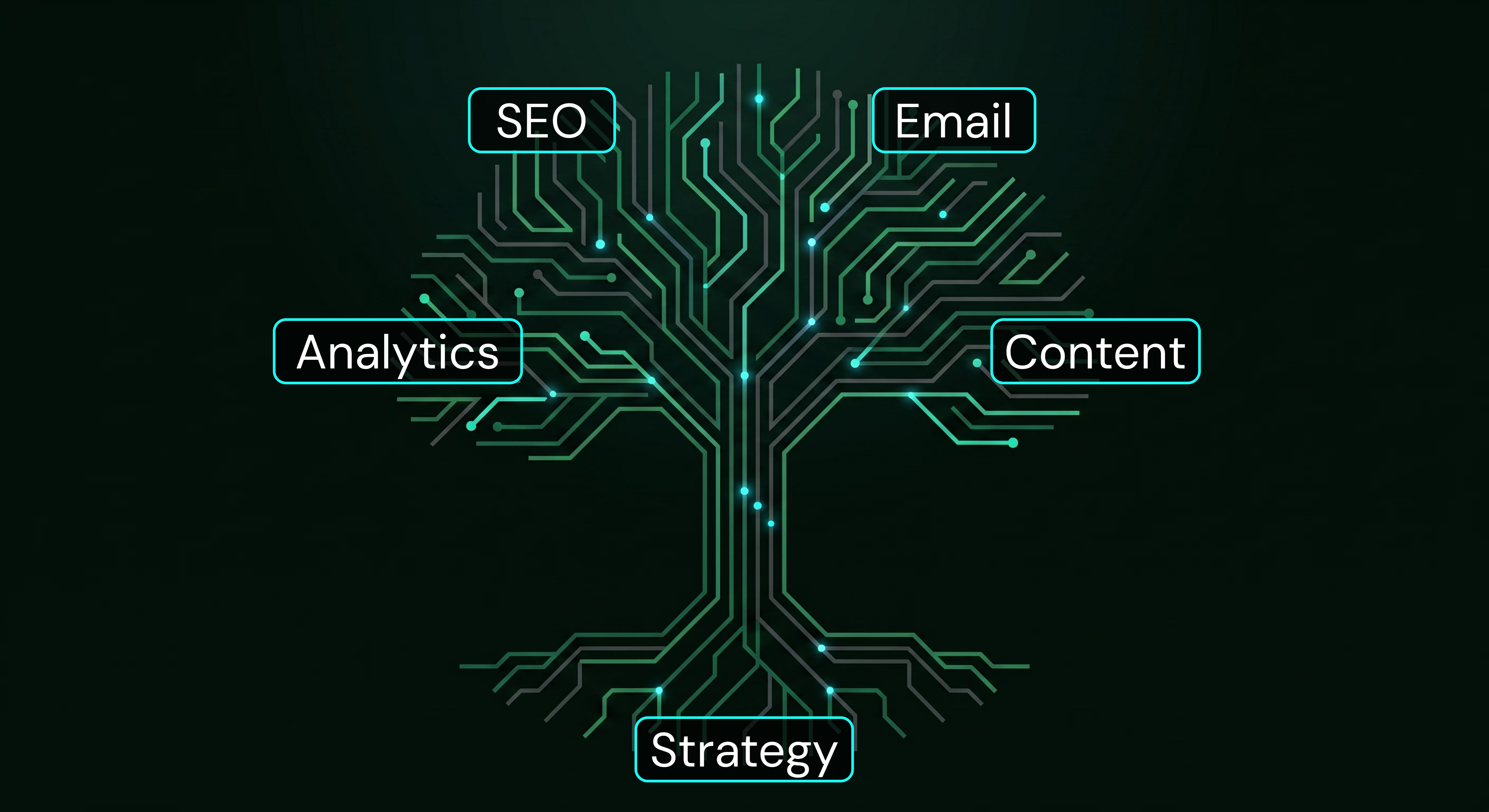
There is rarely one single strategy that works for every business. In most cases, the strongest long-term results come from combining:
into a cohesive system.