Table of contents



Most websites look fine. Very few actually work.
By "work" we mean: attract the right visitors, hold their attention, communicate value clearly, and move people toward a decision. That's what a real web design strategy does and it's why two businesses can spend the same budget on a website and get wildly different results.
This guide breaks down exactly what web design strategy means in 2026, why it's the difference between a site that costs money and one that makes it, and how US businesses can apply it to their next project or redesign.
Web design strategy is the planning layer that comes before design execution. It answers the questions that determine whether your site will perform: Who are we trying to reach? What do we need them to do? What do they need to understand before they'll do it? What objections will they have, and how does the site resolve them?
Without that layer, design becomes decoration. The site might look great but it won't convert, because nobody defined what conversion looks like or how the site should drive it.
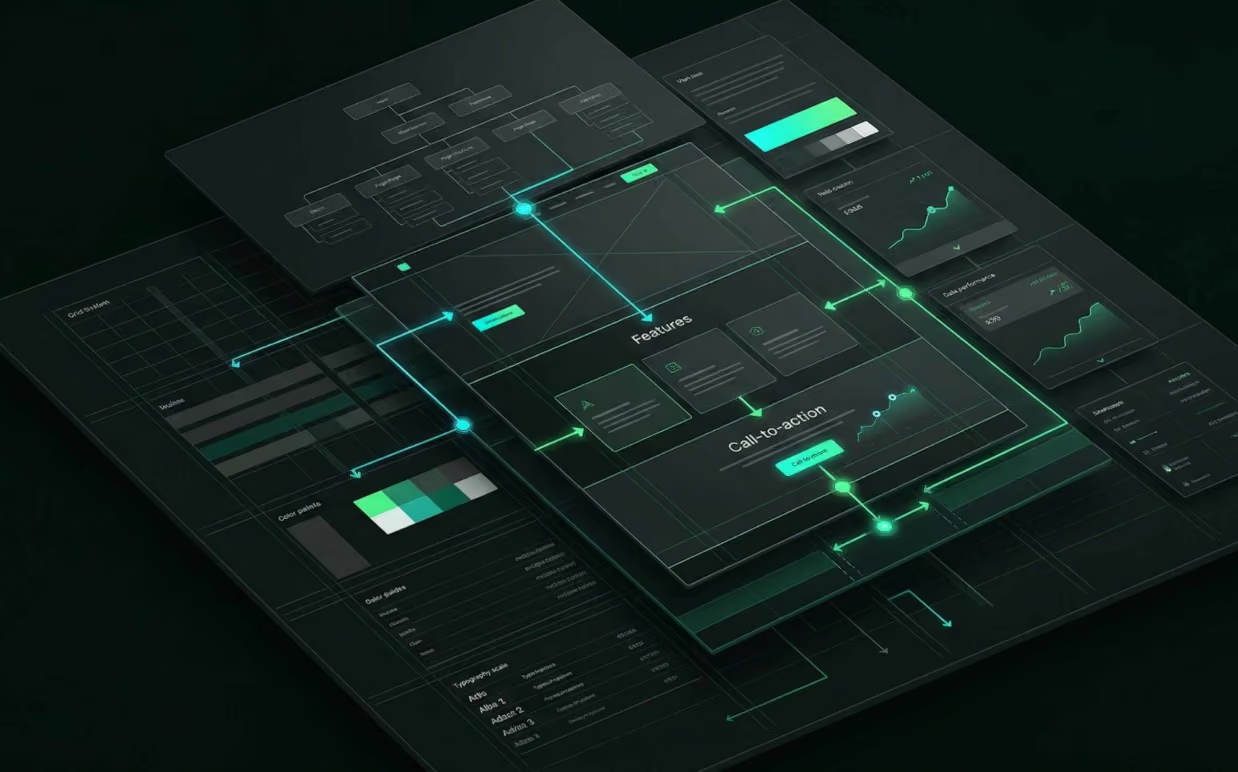
A well-executed web design strategy covers five connected areas:
1.Goals and KPIs what the site needs to achieve and how you'll know if it's working
2.Audience definition who is visiting, what they care about, and where they are in their decision process
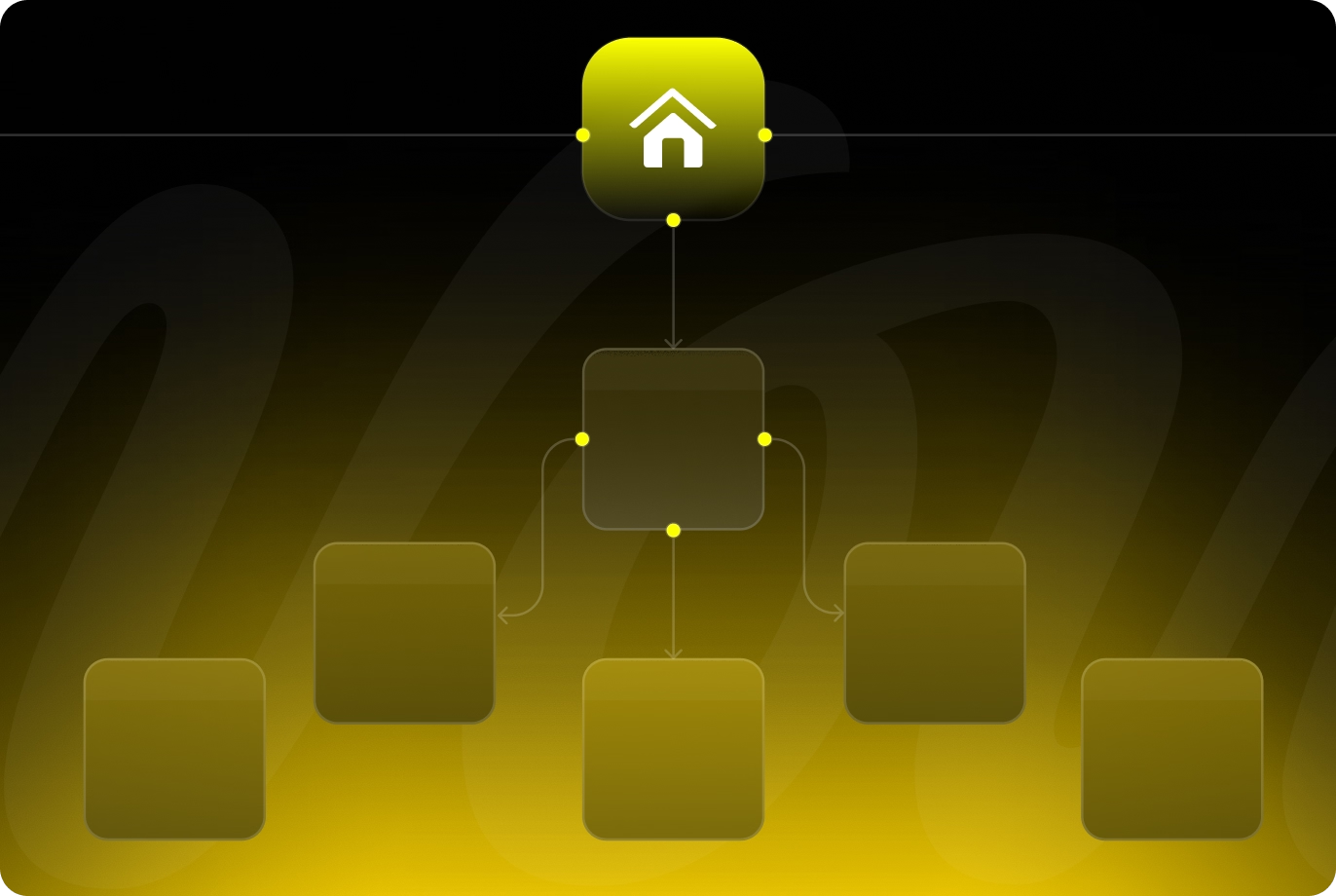
3.Information architecture how content is organized and how users navigate through it
4.Messaging strategy the words that communicate what you do, why it matters, and why you specifically
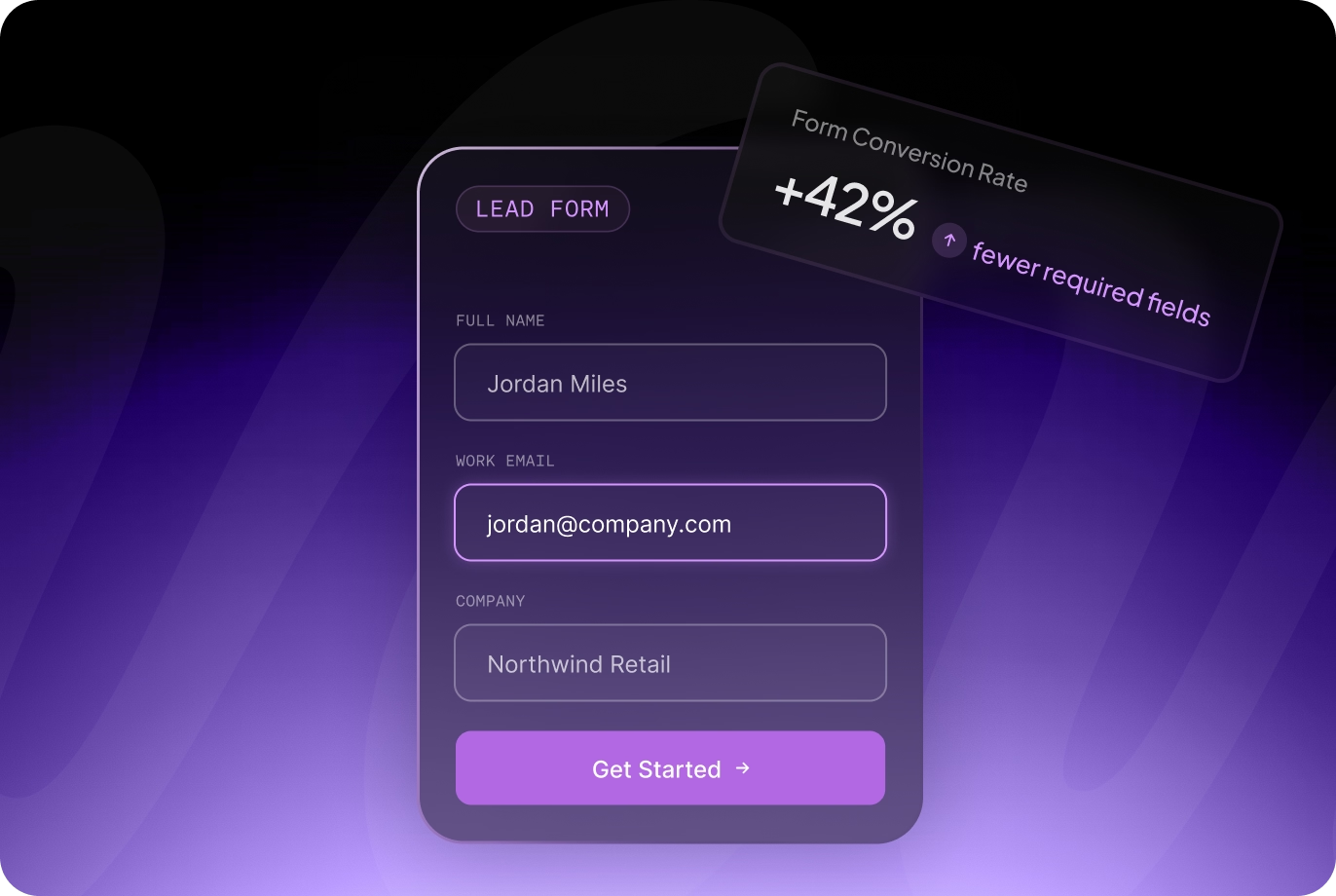
5.Conversion architecture the deliberate placement of calls to action, trust signals, and friction-reducers across the site
Read more about webflow vs shopify which is best?
This sounds counterintuitive, but the visual layer of a website is often the least important factor in whether it performs. A site with excellent design and weak strategy will underperform a strategically sound site with modest visuals, almost every time.
Here's why: users don't interact with websites aesthetically. They interact with them functionally. They land on a page with a specific intent a question they need answered, a problem they need solved, a service they're evaluating. If the site quickly addresses that intent and makes the next step obvious, they move forward. If it doesn't, they leave.
Strategy is what ensures the site addresses intent. Design is what makes that experience feel credible and professional. Both matter, but strategy comes first.
This is especially true for businesses investing seriously in their web presence. If you're evaluating what a results-driven custom build actually involves, our custom website design approach starts with a deep strategy phase before anything is designed.
The highest-performing websites share a set of principles that show up regardless of industry, budget, or visual style. These aren't trends. They're structural realities about how people use the internet.
A repeatable strategy process is what separates agencies and in-house teams that consistently ship high-performing sites from those that ship beautiful ones that don't convert. Here's how we structure it at Wow House.
Before anything else, we need to understand what the site actually needs to accomplish. Not "look great" that's a given. We mean: what does business success look like six months after launch? More qualified leads? Higher average order value? Better conversion on a specific service? We define that clearly upfront because it determines every decision that follows.
We look at who the actual users are not assumed demographics, but real behavioral data. We also audit what the competitive landscape looks like online. What are others in the category doing well? Where are the gaps? This informs both messaging strategy and positioning.
With goals and audience defined, we map out the site's structure. Which pages need to exist? How do they connect? What's the primary user journey from awareness to conversion? This often involves reducing the number of pages compared to what the client initially requested because more pages rarely means better strategy.
Wireframes establish the functional layout of each page before any visual design begins. This is where conversion architecture lives where CTAs sit, how trust elements are sequenced, how the page guides the user through information. Content and copy are developed at this stage too, not after design.
Now the visual layer gets applied to a strategic foundation. Design decisions are made in service of the strategy typography choices that support readability, color choices that reinforce brand credibility, spacing choices that create hierarchy. Nothing is arbitrary.
Launch is the starting point, not the finish line. Post-launch, we look at real user data heatmaps, conversion funnels, engagement rates and refine. The strategy doesn't end when the site goes live; it evolves based on actual performance. If you've been thinking about where your current site stands before a potential redesign, a free site review is a good place to start.
Web design strategy and SEO are not separate workstreams. They're deeply integrated which is why so many SEO efforts underperform when the underlying site isn't strategically sound.
Search engines rank pages, not websites. That means the structure of your site, the clarity of your page-level messaging, the performance of individual pages, and the way your content is organized all directly influence how well you rank even before you've published a single piece of SEO content.
•Information architecture affects crawlability. A strategically organized site makes it easier for search engines to understand your content hierarchy and what each page is about.
•Page speed is a ranking factor. Strategic platform choices (like Webflow over bloated WordPress builds) directly improve Core Web Vitals scores.
•Clear page-level messaging supports keyword relevance. When each page is strategically focused on one topic, Google can more accurately determine what query it should rank for.
•Conversion architecture affects engagement signals. Dwell time, bounce rate, and pages per session all influenced by how strategically your site is designed send signals Google uses to evaluate page quality.
If you're investing in content and SEO alongside your website, our Webflow development services are built to support both clean code, fast loading, and CMS structures designed for scalable content publishing.
After auditing hundreds of business websites, the same strategic failures appear repeatedly. These are worth knowing before you invest in a redesign.
This is the most common. A business finds a design agency, falls in love with their portfolio, and says "make ours look like that." The result is a site that looks great but wasn't built around any specific business goals. It's expensive decoration.
A majority of web traffic now comes from mobile devices, yet many websites are still designed desktop-first and adapted for mobile as an afterthought. Mobile users deserve a deliberately designed experience not a compressed version of the desktop site. This isn't optional anymore.
A static site that looks like a digital business card is a missed opportunity. Your website is the highest-leverage marketing asset you own. It should actively generate leads, build trust, answer objections, and reduce sales friction. If it's not doing that, it's costing you money every day.
Many sites bury their calls to action, make them vague ("Learn More"), or provide so many options that users make no decision at all. Every page should have one obvious, clear, low-friction next step and it should be visible without scrolling.
We see this often: a business undertakes a full redesign, spends significantly on new visuals, and ends up with the same strategic problems in a different visual package. A website redesign checklist built around strategy not just design is essential before any rebuild begins.
Strategy looks different depending on what your site needs to accomplish. Here's how we think about it across common business contexts.
The primary conversion goal is lead generation someone submitting a contact form, booking a call, or picking up the phone. Strategy centers on trust-building, clear service differentiation, and friction-free contact paths. Social proof (case studies, testimonials, client logos) carries enormous weight here.
Strategy focuses on the full purchase funnel from first impression to checkout completion. Product page structure, cross-sell architecture, cart abandonment recovery, and mobile checkout experience are all strategic concerns, not design concerns. Our Shopyflow vs Webflow e-commerce comparison covers some of the platform-level decisions that affect e-commerce strategy.
B2B buyers spend longer in the research phase and have more stakeholders involved in the decision. Strategy here means building credibility over multiple touchpoints detailed case studies, transparent process pages, content that positions the company as a genuine expert, and clear communication for decision-makers with limited time.
For businesses where content is the primary product or lead generation channel, strategy has to account for content scalability. CMS structure, category organization, internal linking architecture, and newsletter capture flows all become strategic priorities, not afterthoughts.
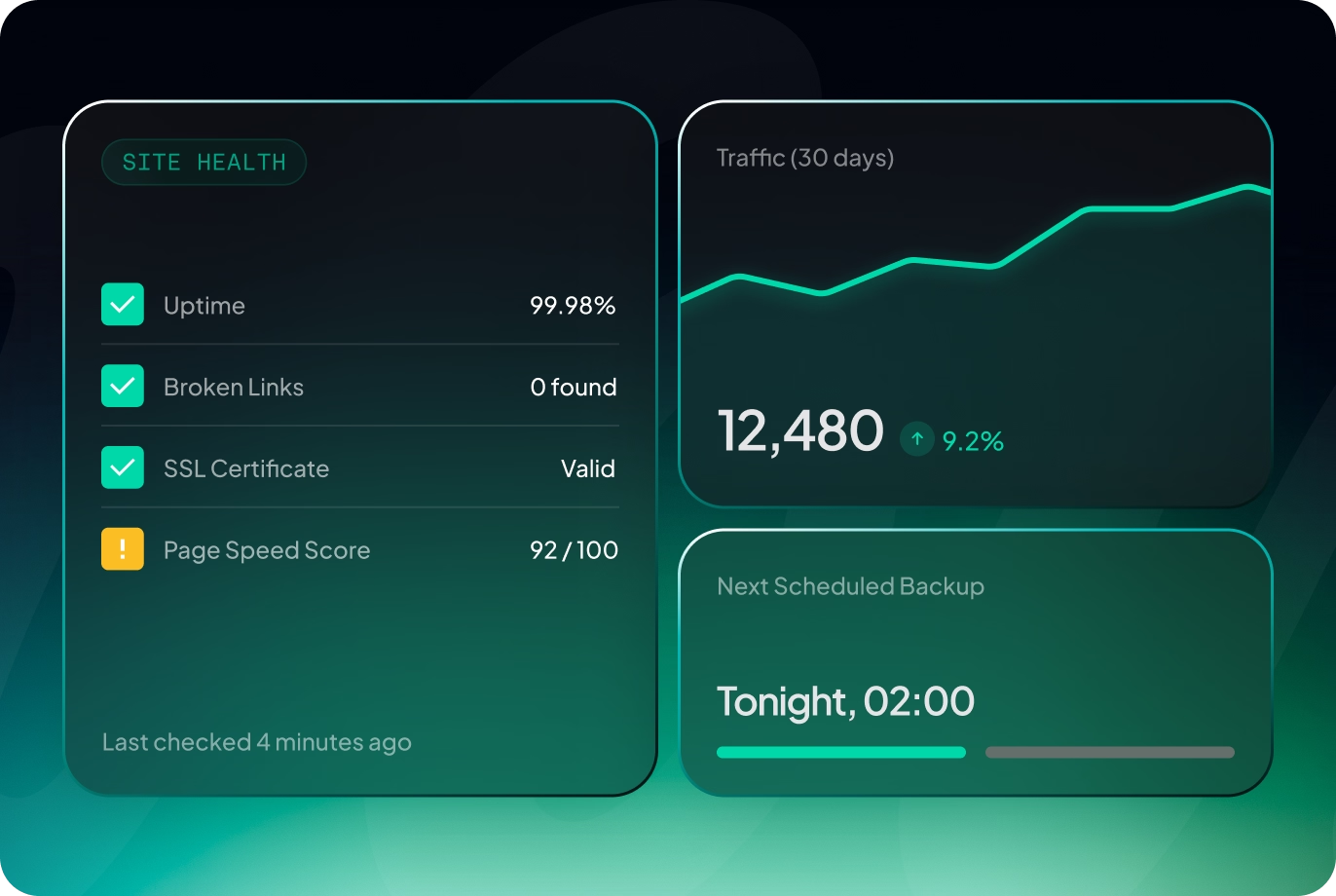
Good strategy requires measurement. Without defined metrics, you're making decisions based on aesthetics instead of outcomes. Here's what to track:
•Conversion rate the percentage of visitors completing a desired action. This is the primary indicator of whether strategy is working.
•Bounce rate by page high bounce rates on specific pages often signal a strategy problem: the page isn't delivering on what brought the user there.
•Time on site a rough proxy for engagement and content quality. Strategic content that addresses user intent keeps people reading.
•Core Web Vitals Google's performance metrics (LCP, FID, CLS) directly correlate with both user experience and search rankings.
•Lead quality not just volume. A well-targeted web design strategy should reduce unqualified inquiries as well as increase qualified ones.
Measuring performance before and after strategic changes is critical. Without a baseline, you're guessing at what moved the needle.
If you're evaluating agencies for a website project, the quality of their strategy process is the most important thing to assess more important than their visual portfolio.
Questions worth asking:
•What happens in your discovery phase before design begins?
•How do you define success for a project, and how do you measure it post-launch?
•Can you walk me through a project where strategy changed the design outcome?
•What does your process look like for a business like mine specifically?
An agency that can answer those questions with specificity with examples, frameworks, and case studies is operating with a genuine strategy discipline. Our guide to choosing a Webflow development agency covers some of this ground from the platform angle but the strategic questions apply regardless of tech stack.
We built Wow House specifically around the belief that beautiful work and strategic work have to be the same thing. Every project we take on starts with a strategy phase understanding the business, the audience, the competitive context, and the definition of success before a single design decision is made.
The Speech Therapy PD project is a good example of what that looks like in practice. The site we designed and built wasn't just visually elevated it was structured around the specific journey their users take before becoming customers. After launch, conversions increased 300%. That outcome came from strategy, not from aesthetics.
If you want to see the range of what we build, our portfolio on the Wow House covers both B2B and consumer projects across industries.
And if you want to understand the pricing and scope of a strategic website build, our pricing page is transparent about what's involved.
A web design strategy is a documented plan that defines what a website needs to achieve, who it needs to serve, how content and structure should be organized, and how users will be guided toward conversion before any visual design begins. It ensures the final site serves business goals, not just aesthetic preferences.
For a typical business website, a thorough strategy and discovery phase takes two to four weeks. Larger projects or those with multiple audience segments can take longer. Rushing this phase is one of the most common reasons websites require an expensive redesign within 12-18 months.
Yes, significantly. Information architecture, page-level clarity, site speed, mobile experience, and internal linking structure all strategic decisions directly affect how well a site ranks. SEO strategy and web design strategy should be developed together, not in separate silos.
Web design refers to the visual and experiential layer of a website typography, color, layout, imagery. Web design strategy refers to the planning and decision-making framework that determines what that design needs to accomplish. Strategy comes first; design executes it.
Strategy is typically included as part of a full website project rather than priced separately. At Wow House, our pricing reflects the full scope strategy, design, and development as an integrated engagement. You can review our approach on the pricing page.
Web design strategy isn't a phase you do once and move on from. It's a lens through which every website decision should be evaluated whether you're building from scratch, planning a redesign, or optimizing a site that's already live.
The businesses whose websites genuinely grow their business have this in common: someone asked the hard strategic questions first. What is this page trying to do? Who is it for? What do they need to understand before they'll act? How do we earn their trust before we ask for anything?
If you're not sure whether your current site was built with that kind of thinking or if you want to explore what a strategically grounded redesign could look like we offer a free site review. No pitch, no pressure. Just honest feedback from a team that cares about building things that actually work.
You can also explore more of our thinking on the Wow House blog, get in touch via the contact page, or grab some free resources on the freebies page.