Table of contents




A website redesign is one of the most misunderstood growth decisions a company can make.
Most teams start with design inspiration. They want something cleaner, more modern, more aligned with where the business is going.
That instinct makes sense.
But if SEO is not part of the conversation from day one, the redesign can quietly undo years of search momentum.
This guide walks through a comprehensive website redesign checklist that protects your rankings, strengthens your structure, and positions the new site to outperform the old one.
It also answers three questions we hear constantly:
Read more about Shopyflow vs Webflow
Search engines reward consistency and structure. When you redesign a site, you are altering both.
A proper website redesign checklist exists to control that transition.
Without it, common issues show up quickly:
We have seen businesses lose significant organic traffic simply because design decisions were made without a structured redesign website checklist guiding the process.
A redesign should feel like an upgrade in authority, not a reset.
The first step in any serious website redesign checklist is documentation.
Before design begins, capture:
This baseline becomes your reference point.
A strong website redesign SEO checklist treats this stage as non-negotiable. If you do not know what is currently working, you cannot protect it.
Once you have benchmarks, move into a complete audit.
Your redesign website checklist should review:
This is also where strategic decisions begin.
Not every page deserves to survive the redesign. Some pages should be consolidated. Others should be expanded.
This is where understanding “what is custom website design” starts to matter.
Many businesses ask, what is custom website design, especially during a redesign.
In practical terms, what is custom website design?
It is a site built around your structure, your strategy, and your content priorities. It is not forced into a theme layout that limits hierarchy or page depth.
When redesigning with SEO in mind, custom website design becomes a strategic advantage.
You can:
That level of control is difficult to achieve in rigid templates.
One of the most critical components of any website redesign checklist is redirect planning.
If URLs change, authority can be lost overnight.
Your website redesign SEO checklist should include:
Redirect strategy is often treated as a technical afterthought. It should not be.
This step alone can determine whether traffic remains stable post-launch.
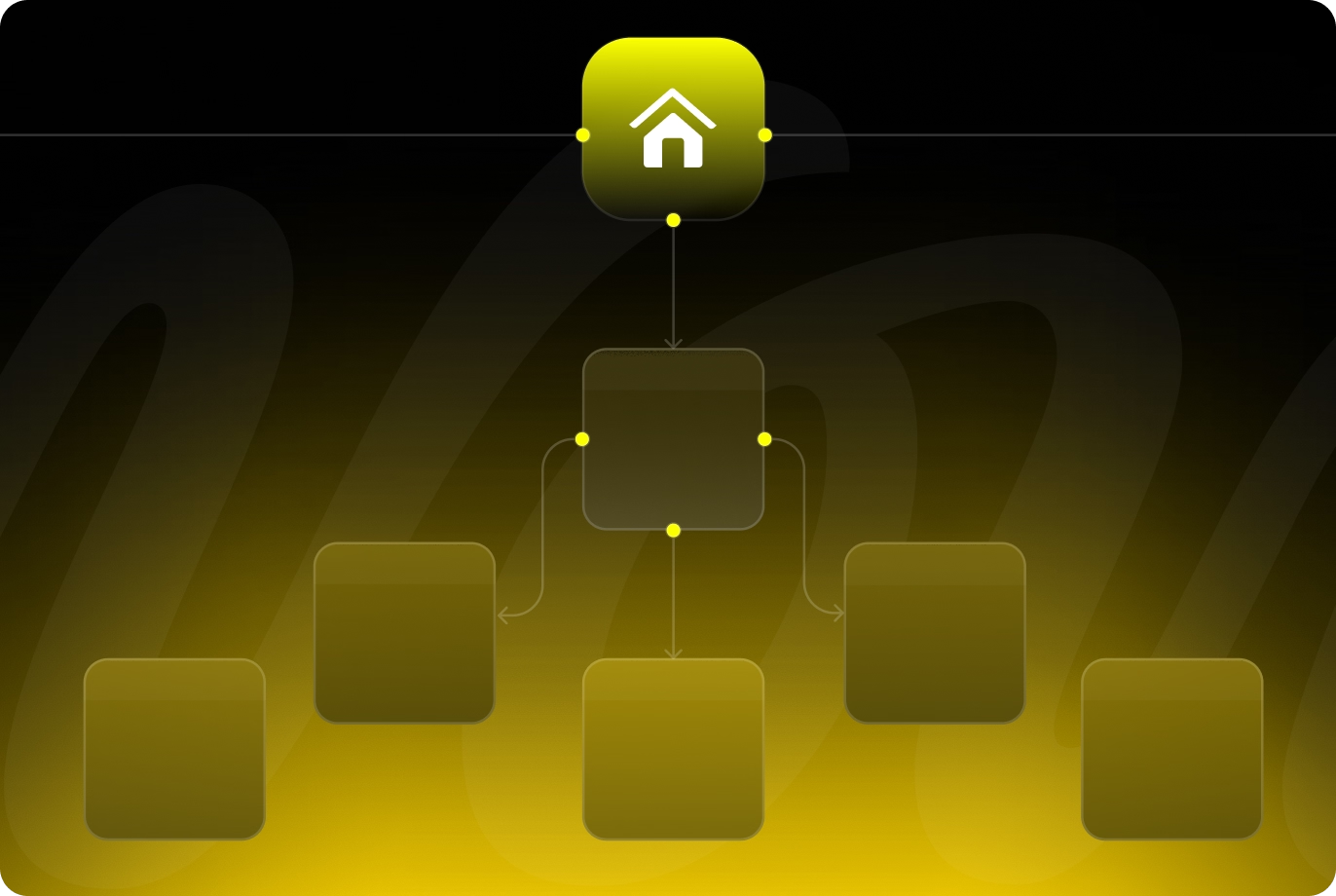
Architecture is where SEO and design intersect most directly.
A thoughtful redesign website checklist will not simply rearrange navigation. It will evaluate whether the existing hierarchy supports search intent.
Questions to ask:
This is one of the clearest examples of how custom website design improves SEO.
When you rebuild architecture strategically, you improve crawl efficiency and topical authority at the same time.
It is common to ask how custom website design improves SEO beyond aesthetics.
Here are the practical reasons.
Clean code and lighter builds
Custom development removes unnecessary scripts and structural clutter, improving load speed and crawl efficiency.
Intentional internal linking
Instead of linking randomly, you can build a system where blog posts reinforce service pages and pillar pages reinforce topic clusters.
Strategic content hierarchy
Custom builds allow deeper page structures that support ranking for competitive terms.
Performance optimization at the development level
You can optimize image delivery, reduce code bloat, and structure CMS collections properly.
Each of these elements directly contributes to rankings.
This is how custom website design improves SEO in measurable ways.
A professional website redesign checklist does not shrink content for the sake of minimalism.
Instead, it evaluates:
A redesign is often the best moment to strengthen content depth.
Your website redesign SEO checklist should align content with search intent and topical authority.
When done correctly, the new site launches with stronger semantic coverage than the old one.
Every important page should be reviewed before launch.
Your redesign website checklist must confirm:
On-page improvements are another example of how custom website design improves SEO. When you control layout and structure, SEO best practices become easier to implement correctly.
SEO performance does not exist in isolation from user behavior.
A complete website redesign checklist integrates:
Improved engagement supports long-term search performance.
Search engines evaluate user interaction signals indirectly. A site that holds attention tends to perform better over time.
Before going live, your website redesign SEO checklist should verify:
This is the safeguard stage.
Many redesign-related ranking losses happen because this phase was rushed.
After launch, monitor closely for 30 to 60 days.
A disciplined website redesign checklist includes:
Minor fluctuations are normal.
Sustained decline signals structural issues that need correction.
A complete website redesign checklist includes:
Before Redesign
During Redesign
Pre-Launch
Post-Launch
A website redesign checklist is not simply a technical document. It is a strategic framework that protects your search visibility while positioning your business for long-term growth.
Understanding what is custom website design clarifies why structure matters.
Knowing how custom website design improves SEO helps you design with intent rather than aesthetics alone.
When a redesign is handled thoughtfully, it becomes a compounding asset instead of a risk.