Table of contents



A website redesign usually starts because something is no longer working. The site feels dated, leads have slowed, the messaging has been outgrown, or the business has changed since the last version launched. Those are good reasons to redesign, and the longer a site stays as it is, the more an outdated website can quietly cost your business.
But those reasons only describe what is happening inside your company. A competitor website analysis adds the external context: what prospective customers see when they compare you with other options, where competitors have raised expectations, and where your market has left opportunities open.
The goal is not to build a better copy of a competitor's website. It is to understand the competitive environment before making major decisions about positioning, content, user experience, SEO, and functionality.
A competitor website analysis is a structured evaluation of competing companies' websites. It covers their design, messaging, user experience, content, SEO visibility, performance, conversion paths, and positioning, and it ends with specific opportunities and redesign priorities for your own site.
Customers rarely evaluate your website in isolation. A prospective client might open your site, then three competitors in separate tabs, read reviews, search for a specific service, and ask an AI search tool for recommendations before contacting anyone.
Their perception of your website is shaped by what everyone else offers:
Without this view, teams end up judging the new design against the old one. Does this look better? Is the navigation cleaner? Do we like this headline more? Those questions have value, but they don't show whether the site will improve your competitive position.
A stronger question is: what does our website need to communicate or accomplish better than the alternatives our customers are considering?
For example, research can reveal that competitors have far better educational content but weak proof of results. It can show polished sites that make it hard to tell who they actually serve. Or it can show that everyone targets the same high-volume SEO topics while an important stage of the customer journey is barely addressed. Findings like these decide where redesign resources should actually go.
Effective evaluation goes beyond looking at homepages and deciding which ones look good. Examine each system that affects website performance for the business.
Review typography, spacing, imagery, brand consistency, page composition, interactive elements, and mobile presentation. Don't rank designs by personal taste. Look for patterns:
These patterns show the visual expectations customers may already have, and they expose opportunities to break from conventions that make every company look interchangeable.
Within the first few sections of a homepage or service page, can you tell what the company does, who it serves, why customers choose it, and what makes it different?
Watch for recurring claims. If six companies call themselves innovative, customer-focused industry leaders, those phrases provide almost no differentiation. Look for competitors that name concrete advantages instead, such as turnaround time, proprietary technology, geographic coverage, measurable results, specialized expertise, or implementation support.
Then compare that with your own site. This step often shows that the biggest redesign opportunity isn't visual at all. The company may need clearer positioning before design can support it.
Use competitors' websites the way a prospective customer would. Find a specific service. Look for proof they've solved a similar problem. Try to understand their process, answer a common question, and contact them. Note where the experience becomes confusing.
Evaluate navigation, information hierarchy, calls to action, forms, mobile usability, search functionality, and the number of steps needed to reach important information. Then look at how each competitor serves different stages of the buying process:
This matters most in B2B website design, where longer sales cycles and multiple stakeholders mean the site has to support several of these journeys at once.
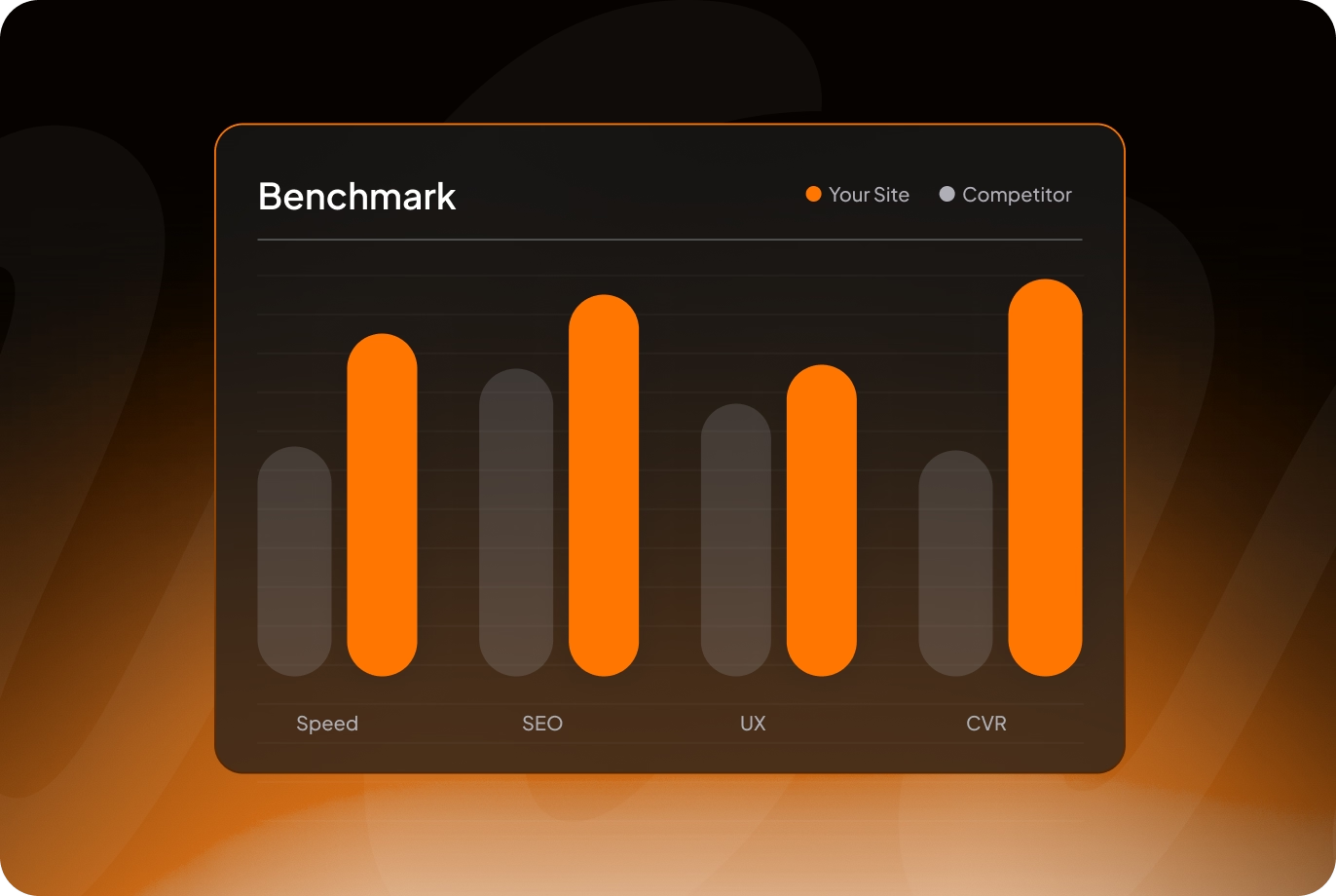
Visual quality matters less if the experience is slow or unstable. Benchmarking website performance can include the three Core Web Vitals Google uses to evaluate loading, responsiveness, and visual stability:
You can also compare page weight, image optimization, mobile performance, and scripts. Competitor data provides context, but the goal isn't to beat a rival's PageSpeed score by five points. Performance affects real users, and a slow page creates friction before anyone sees the work your team spent months on.
A competitor SEO analysis looks beyond the visible website:
Pay close attention to the pages actually producing visibility. A competitor may have hundreds of blog posts while most of its organic presence comes from ten service pages and a few strong resources. Another may dominate informational searches but have weak commercial pages. That distinction tells you where your own content investment belongs. If you'd like help turning these findings into a content and ranking roadmap, our digital marketing and SEO services are built around exactly that work.
Compare what competitors actually give visitors: service pages, case studies, FAQs, resource centers, industry pages, comparison content, videos, tools, research, and documentation.
Depth is not word count. A 3,000-word page of repetitive copy can offer less than a concise page with specific answers, original data, examples, diagrams, and relevant proof. Ask what a serious buyer would learn from each competitor and what questions remain unanswered. Those unanswered questions often become your opportunities.
A useful analysis combines manual review with quantitative tools:
The tool matters less than the question you're trying to answer. A spreadsheet of hundreds of competitor keywords isn't useful on its own. The value is in what those keywords reveal about customer demand, competitor strategy, and gaps in your own site. Likewise, recording 20 PageSpeed scores gives you numbers, but learning that every major competitor has a poor mobile experience gives you an opportunity.
For most redesigns, we recommend a consistent framework: evaluate the same criteria across a focused group of competitors. That keeps comparisons meaningful and ties the research to actual redesign decisions.
Competitive research naturally draws attention to strengths, such as a better case study section, a sophisticated interactive feature, or strong organic visibility. Weaknesses can be even more valuable. Common gaps include:
This is also where customer knowledge matters. Your sales and customer service teams already know the questions prospects keep asking. Compare those questions with what competitors answer online. If customers consistently care about something nobody in the category explains well, that is a stronger opportunity than adding a feature competitors already have.
Competitor SEO analysis can uncover similar gaps in search: commercially relevant topics where competitors have weak pages, search intents that are poorly served, or areas where you have real expertise but almost no content. These findings can shape the new site architecture and content roadmap before development begins.
Competitive analysis can easily become counterproductive. A team sees a feature on one competitor's site and wants it. Then another. Soon the redesign is an assortment of ideas borrowed from five companies, and it may look current while doing little to set the business apart.
The analysis should show where the market sets expectations and where you have room to create distance:
Pair competitive research with internal research. Your strategy, customers, sales process, capabilities, brand, and goals should set the direction, and competitor research should supply context. Instead of asking "What should we copy?", ask: "What does this tell us about the experience customers currently have, and how can ours be more useful?" That keeps a redesign from becoming obsolete the moment competitors update their own sites.
Research only matters if it changes what you do. Translate findings into specific priorities:
For each finding, work through four questions:
For example, finding that competitors have clearer industry-specific pages is an observation. The redesign priority could be dedicated industry journeys that let prospects quickly find relevant services, proof, and use cases. The business rationale is stronger relevance for qualified prospects and a clearer path to conversion. That is far more actionable than adding "improve industry pages" to a brief. Apply the same framework to navigation, content, messaging, SEO, performance, mobile UX, conversion paths, and technical requirements.
Competitive analysis is one input into understanding what a new website must accomplish. Before a major redesign, we also recommend reviewing analytics, organic search performance, content, technical health, conversion paths, information architecture, CMS requirements, accessibility, integrations, and internal workflows. A website redesign checklist can help you organize that work.
Each input answers a different question:
This matters especially for established companies, because an existing site holds years of accumulated value. Pages may rank, campaigns may depend on specific landing pages, and integrations may connect the site to other systems. A redesign has to improve the experience without discarding what already works. Competitive research shows where change is worthwhile, and the broader audit shows how to make those changes responsibly.
A redesign is a significant investment, and early decisions can influence website performance for years. A competitor website analysis shows where customer expectations have changed, where your site is falling behind, where competitors have built real advantages, and where the market still has obvious gaps. Most importantly, it helps you separate changes that make a site look newer from changes that make the business more competitive.
If you're also deciding who should lead the project, our guide on how to choose the right Webflow agency covers what to look for in a partner.
If you're considering a redesign, our free site review can help identify issues with your current website before you decide what needs to change. When the opportunity calls for a larger strategic shift, our custom website design process brings research, messaging, UX, content, SEO, design, and development together around your business goals.
A competitor website analysis is a structured evaluation of competing companies' websites to understand their design, messaging, user experience, content, SEO visibility, performance, conversion paths, and positioning. Before a redesign, it establishes the competitive context around your website and identifies opportunities to improve the experience or differentiate your business.
Start by selecting a focused group of direct competitors and search competitors. Evaluate each site against consistent criteria: design, positioning, navigation, service pages, content depth, calls to action, mobile usability, performance, SEO visibility, and conversion paths. Then translate the findings into specific opportunities and redesign priorities instead of a list of competitor features to copy.
Look at visual design, messaging, positioning, navigation, user journeys, mobile experience, page speed, content quality, service information, case studies, calls to action, SEO visibility, and ease of use. Pay particular attention to what competitors consistently do well, where they create friction, and which customer needs the whole category overlooks.
It shows the environment in which customers evaluate your company. Without it, redesign decisions tend to focus on internal preferences or cosmetic improvements. Competitive research can reveal changing customer expectations, content gaps, positioning opportunities, SEO weaknesses, and experience improvements that should shape the redesign strategy.
Competitor SEO analysis evaluates how competing websites perform in organic search, including keyword visibility, ranking pages, backlinks, content coverage, site architecture, search intent, and topical authority. The goal is to find search opportunities and risks that should influence your site architecture, content strategy, and redesign priorities.
Compare Core Web Vitals (LCP, INP, and CLS), loading speed, mobile performance, page weight, and other technical factors across competing sites. Google PageSpeed Insights and Lighthouse provide useful measurements. Focus the comparison on user experience and business impact, not on a higher score for its own sake.
There is no universal number, but the group should be small enough for meaningful analysis. Include direct business competitors and companies competing with you in search when those groups differ. A few carefully chosen competitors usually give more insight than a superficial review of dozens.
No. Use competitive research to understand what customers already encounter, find weaknesses in the market, and decide how your site can communicate your strengths more effectively. The final strategy should reflect your customers, positioning, capabilities, and business goals.